


Bedankt voor het vertrouwen het afgelopen jaar! Om jou te bedanken bieden we GRATIS verzending (in België) aan op alles gedurende de hele maand januari.
- Afhalen na 1 uur in een winkel met voorraad
- In januari gratis thuislevering in België
- Ruim aanbod met 7 miljoen producten
Bedankt voor het vertrouwen het afgelopen jaar! Om jou te bedanken bieden we GRATIS verzending (in België) aan op alles gedurende de hele maand januari.
- Afhalen na 1 uur in een winkel met voorraad
- In januari gratis thuislevering in België
- Ruim aanbod met 7 miljoen producten





€ 241,45
+ 482 punten
Omschrijving
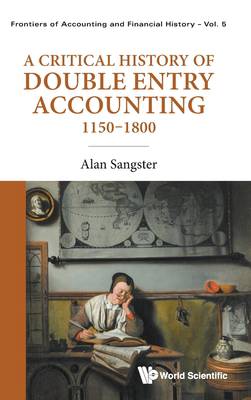
The English language accounting history of double entry accounting before 1800 has reached an impasse. The doors to its reawakening are fiercely guarded by combination locks powered by confirmation bias and adherence to a priori wisdom requiring vast amounts of supportive scholarship to make public the smallest contribution to what is known and understood of the first 600 years of its use. To open those doors, a foundation is needed upon which scholarship can begin anew -- a framework of reference that can be used to justify the validity and relevance of scholarship and discovery in this field. That is the purpose and role of this book.It does not focus on the technical. It focuses on the environment and context of use of the method, and its function. It considers 'why' and consequences. It asks who, when, where, and what, along with 'how'. It adopts the perspective that the reason for the bookkeeping drove how it was adopted, not the availability of parchment or paper, nor the emergence of the concept of the technology -- the book -- in which it was recorded. Rather its use was driven by a need of the person who wrote the record, or by the needs of those who wished a record to be kept.A critical traditional historical method is adopted. Explanations are sought and identified utilising knowledge of the environment and context of practice that, to this point, rarely if ever feature in the antiquarian historiography this book ideally seeks to replace. The approach adopted is multi-disciplinary and the sources used are multi-disciplinary and multi-lingual. This book is essential reading for anyone with an interest in accounting's past.
Specificaties
Betrokkenen
- Auteur(s):
- Uitgeverij:
Inhoud
- Aantal bladzijden:
- 440
- Taal:
- Engels
Eigenschappen
- Productcode (EAN):
- 9789819815807
- Verschijningsdatum:
- 11/12/2025
- Uitvoering:
- Hardcover
- Formaat:
- Genaaid
- Afmetingen:
- 152 mm x 229 mm
- Gewicht:
- 757 g


Alleen bij Standaard Boekhandel
+ 482 punten op je klantenkaart van Standaard Boekhandel
SOLDEN


Beoordelingen
We publiceren alleen reviews die voldoen aan de voorwaarden voor reviews. Bekijk onze voorwaarden voor reviews.