


- Afhalen na 1 uur in een winkel met voorraad
- Gratis thuislevering in België vanaf € 30
- Ruim aanbod met 7 miljoen producten
- Afhalen na 1 uur in een winkel met voorraad
- Gratis thuislevering in België vanaf € 30
- Ruim aanbod met 7 miljoen producten





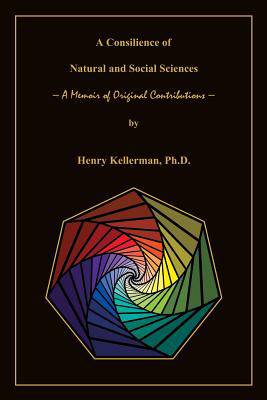
A Consilience of Natural and Social Sciences - A Memoir of Original Contributions
Henry Kellerman
Paperback | Engels
€ 80,95
+ 161 punten
Eenvoudig bestellen
Veilig betalen


Gratis thuislevering vanaf € 30 (via bpost)
Gratis levering in je Standaard Boekhandel
Omschrijving
This volume presents a series of original theories formulated over Dr. Henry Kellerman's more than 50 year career first as psychologist, then as psychoanalyst. These are theories reflecting phenomena both in the natural as well as social sciences. They are foundational theories, several of which were published in scientific and clinical journals, as well as in books. The seven theories formulated and presented here are: 1) The entire nightmare domain as it relates to dreaming and to the various facets of emotion and personality; a formulation able to account for all possible nightmare contents with respect to only a few named basic nightmare categories. 2) The transformation of the apparent circular shape of the micro-group (the therapy group) into its actual physical (hidden) shape. This assumes that an ideal group composition based upon an arrangement of ideal or basic diagnostic forces (and basic emotions). 3) Primary emotion-correlates to DNA constituents: a DNA double helical model for primary emotions that corresponds to the physical DNA model; that is, proposing which primary emotions may be inherent in which DNA constituents. 4) The psychoanalysis of symptoms: revealing a four-step symptom-code that within a systematic talking procedure demonstrates how any symptom within a distinct class of emotional/psychological symptoms, can be understood and unraveled - cured. 5) Parkinson's disease: implications of the prosody of speech-specifically, the role of 'vocal resonance, ' with a focus on vibration, in the appearance and treatment of initial Parkinsonian symptoms. 6) The discovery of God: A psycho/evolutionary perspective in which God is seen as discovered by virtue of a hard-wired genetic program defined not as a God-wired genetics, but rather as a hard-wired need for security, balance, peace of mind, the expectation of fairness, and a sense of empowerment. 7) Revealing the code to understand unconscious communication (its algorithm) and identifying the specific primary themes that govern each person's unconscious thematic objective. The underlying primary theme will tell us what the person wants (or wishes) no matter what the conscious message (content) seems to be. Thus, the algorithm contains an infrastructural composition based upon: wishes as the most derivative agent of the pleasure principle; these wishes underpinned by the epigenetic primary emotion system etched in the bases of DNA; and, all of it bundled in the form of a schema.
Specificaties
Betrokkenen
- Auteur(s):
- Uitgeverij:
Inhoud
- Aantal bladzijden:
- 372
- Taal:
- Engels
Eigenschappen
- Productcode (EAN):
- 9780984870080
- Verschijningsdatum:
- 1/10/2014
- Uitvoering:
- Paperback
- Formaat:
- Trade paperback (VS)
- Afmetingen:
- 156 mm x 234 mm
- Gewicht:
- 521 g


Alleen bij Standaard Boekhandel
+ 161 punten op je klantenkaart van Standaard Boekhandel
CADEAU

AANGERADEN


Beoordelingen
We publiceren alleen reviews die voldoen aan de voorwaarden voor reviews. Bekijk onze voorwaarden voor reviews.