


- Afhalen na 1 uur in een winkel met voorraad
- Gratis thuislevering in België vanaf € 30
- Ruim aanbod met 7 miljoen producten
- Afhalen na 1 uur in een winkel met voorraad
- Gratis thuislevering in België vanaf € 30
- Ruim aanbod met 7 miljoen producten





€ 119,45
+ 238 punten
Omschrijving
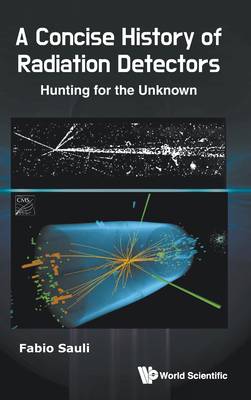
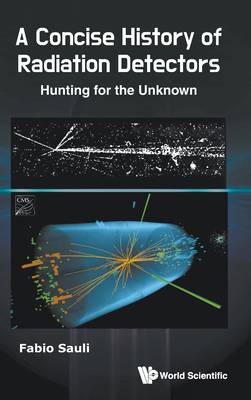
The development of radiation detectors is closely entangled to the study of elementary particles and of their interactions. From the early observations of cosmic rays using photographic emulsions, to the present complex electronic systems operating in high-energy accelerators, this book describes the evolution of detectors employed in particle physics and astrophysics: cloud and bubble chambers, spark chambers, solid state and gaseous position-sensitive detectors. Major discoveries have been made making use of increasingly advanced devices: natural radioactivity, X-rays, π mesons, the positron, the W and the Higgs bosons, only to mention a few. Suitable for practitioners and students of particle physics, this book gives a concise but comprehensive description of the evolution and major applications of radiation detector technologies.
Specificaties
Betrokkenen
- Auteur(s):
- Uitgeverij:
Inhoud
- Aantal bladzijden:
- 208
- Taal:
- Engels
Eigenschappen
- Productcode (EAN):
- 9789819819393
- Verschijningsdatum:
- 16/11/2025
- Uitvoering:
- Hardcover
- Formaat:
- Genaaid
- Afmetingen:
- 152 mm x 229 mm
- Gewicht:
- 444 g


Alleen bij Standaard Boekhandel
+ 238 punten op je klantenkaart van Standaard Boekhandel
CADEAU


Beoordelingen
We publiceren alleen reviews die voldoen aan de voorwaarden voor reviews. Bekijk onze voorwaarden voor reviews.