


- Afhalen na 1 uur in een winkel met voorraad
- Gratis thuislevering in België vanaf € 30
- Ruim aanbod met 7 miljoen producten
- Afhalen na 1 uur in een winkel met voorraad
- Gratis thuislevering in België vanaf € 30
- Ruim aanbod met 7 miljoen producten





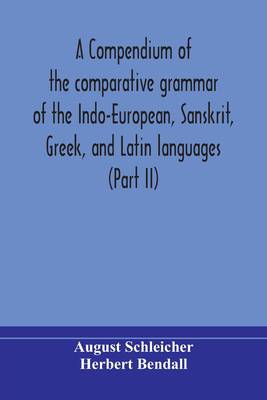
A Compendium Of The Comparative Grammar Of The Indo-European, Sanskrit, Greek, And Latin Languages (Part Ii)
August Schleicher, Herbert Bendall
Paperback | Engels
€ 35,95
+ 71 punten
Uitvoering
Eenvoudig bestellen
Veilig betalen


Gratis thuislevering vanaf € 30 (via bpost)
Gratis levering in je Standaard Boekhandel
Omschrijving
A masterwork of 19th-century philology, August Schleicher's A Compendium Of The Comparative Grammar Of The Indo-European, Sanskrit, Greek, And Latin Languages (Part II) stands as a cornerstone in the study of language evolution. Here, the roots of the Indo-European family are meticulously unravelled, revealing the threads that bind Sanskrit, Greek, and Latin grammar. Every page invites the reader into a world where words are living echoes of ancient civilisations. Connections emerge. Patterns deepen. This enduring linguistic reference book is essential for anyone fascinated by the origins and transformations of European classical languages. Schleicher's rigorous historical language analysis, drawn from years of scholarly inquiry, provides a clear comparative grammar study that remains vital for academic linguistics research today. Scholars and linguists will appreciate the precision, while collectors and casual readers alike will find themselves drawn to the sweeping narrative of language itself. Republished by Alpha Editions in a careful modern edition, this volume preserves the spirit of the original while making it effortless to enjoy today - a heritage title prepared for readers and collectors alike. More than a reprint, it is a cultural treasure, inviting a new generation to explore the foundations of historical linguistics comparison and the enduring legacy of August Schleicher's works.
Specificaties
Betrokkenen
- Auteur(s):
- Uitgeverij:
Inhoud
- Aantal bladzijden:
- 212
- Taal:
- Engels
Eigenschappen
- Productcode (EAN):
- 9789354174254
- Verschijningsdatum:
- 29/09/2020
- Uitvoering:
- Paperback
- Formaat:
- Trade paperback (VS)
- Afmetingen:
- 152 mm x 229 mm
- Gewicht:
- 317 g


Alleen bij Standaard Boekhandel
+ 71 punten op je klantenkaart van Standaard Boekhandel
CADEAU

AANGERADEN


Beoordelingen
We publiceren alleen reviews die voldoen aan de voorwaarden voor reviews. Bekijk onze voorwaarden voor reviews.