


- Afhalen na 1 uur in een winkel met voorraad
- Gratis thuislevering in België vanaf € 30
- Ruim aanbod met 7 miljoen producten
- Afhalen na 1 uur in een winkel met voorraad
- Gratis thuislevering in België vanaf € 30
- Ruim aanbod met 7 miljoen producten





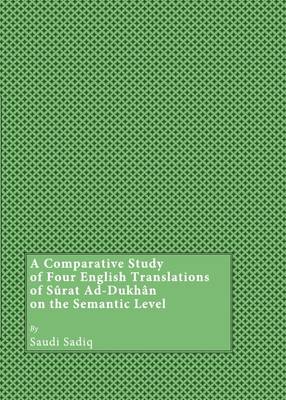
A Comparative Study of Four English Translations of Sûrat Ad-Dukhân on the Semantic Level
Saudi Sadiq
Hardcover | Engels
€ 115,45
+ 230 punten
Omschrijving
Through combining a knowledge of translation theory and application, the present book aims at holding a semantic comparison of four English translations attempted by Muhammad Marmaduke Pickthall, 'Abdullah Yusuf 'Ali, Arthur J. Arberry and Muhammad Mahmud Ghali of Surat Ad-Dukhan (the Chapter of Smoke). As a theoretical framework, the book deals with several linguistic and cultural problems of translation, with special reference to Qur'an translation, and the principles that should be considered on translating the Qur'an. The core of the book is a comparison of sixty-eight lexical, syntactic and stylistic selections from Surat Ad-Dukhan. The comparison depends on various Qur'an interpretations and Arabic dictionaries to decide the precise meaning(s) of the selections. Then, a translation is suggested, and the four translations are judged: the correct ones are acknowledged and the mistaken shown, along with the reasons underlying the mistake(s). To reach the precise meaning in English and judge the translations compared accurately, many English dictionaries are utilized. The comparison shows that the best translation in terms of meaning precision and easiness of expression is that of Ghali, followed by Pickthall's, Arberry's and 'Ali's respectively.
Specificaties
Betrokkenen
- Auteur(s):
- Uitgeverij:
Inhoud
- Aantal bladzijden:
- 205
- Taal:
- Engels
Eigenschappen
- Productcode (EAN):
- 9781443820608
- Verschijningsdatum:
- 27/07/2010
- Uitvoering:
- Hardcover
- Formaat:
- Genaaid
- Afmetingen:
- 150 mm x 208 mm
- Gewicht:
- 417 g


Alleen bij Standaard Boekhandel
+ 230 punten op je klantenkaart van Standaard Boekhandel
Cadeau

AANGERADEN


Beoordelingen
We publiceren alleen reviews die voldoen aan de voorwaarden voor reviews. Bekijk onze voorwaarden voor reviews.