



Je cadeautjes zeker op tijd in huis hebben voor de feestdagen? Kom langs in onze winkels en vind het perfecte geschenk!
- Afhalen na 1 uur in een winkel met voorraad
- Gratis thuislevering in België vanaf € 30
- Ruim aanbod met 7 miljoen producten
Je cadeautjes zeker op tijd in huis hebben voor de feestdagen? Kom langs in onze winkels en vind het perfecte geschenk!
- Afhalen na 1 uur in een winkel met voorraad
- Gratis thuislevering in België vanaf € 30
- Ruim aanbod met 7 miljoen producten





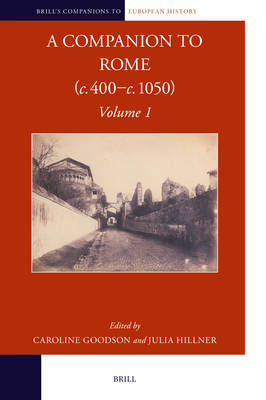
A Companion to Rome (C. 400-C. 1050)
€ 251,95
+ 503 punten
Omschrijving
Rome was the most accomplished urban form of Mediterranean antiquity. Due to its remarkable and complex urban continuity, it remained the version of a way of living that other cities aspired to achieve throughout the early Middle Ages. Yet Rome between 400 and 1050 is often only studied as an idea that inspired imaginations, or for the papacy's role in cultural transmission across Europe.
This volume drastically refocuses our attention on Rome's inhabitants, their identities, relationships, institutions, experiences, agencies, and spaces, and on how these local aspects interacted with the city's universal character. It also bridges two periods of Rome that are typically separated, namely late antiquity and the early Middle Ages. Through collaborative authorship of thematic essays, it integrates Anglophone discourses and approaches to Rome by scholars from Italian as well as other European traditions.
Contributors are: Margaret Andrews, Shane Bobrycki, Giulia Bordi, François Bougard, Samuel Cohen, Marios Costambeys, Joseph Dyer, Clemens Gantner, Caroline Goodson, Robert Heffron, Julia Hillner, Mark Humphries, Paul Johnson, Maijastina Kahlos, Paolo Liverani, Markus Löx, Carlos Machado, Federico Marazzi, Maya Maskarinec, Silvia Orlandi, Riccardo Santangeli Valenzani, Kristina Sessa, Lucrezia Spera, Francesca Romana Stasolla, Michela Stefani, Francesca Tinti, Dennis Trout, Andrea Verardi, Massimiliano Vitiello, Giorgia Vocino, Veronica West Harling, and Sarah Whitten.
This volume drastically refocuses our attention on Rome's inhabitants, their identities, relationships, institutions, experiences, agencies, and spaces, and on how these local aspects interacted with the city's universal character. It also bridges two periods of Rome that are typically separated, namely late antiquity and the early Middle Ages. Through collaborative authorship of thematic essays, it integrates Anglophone discourses and approaches to Rome by scholars from Italian as well as other European traditions.
Contributors are: Margaret Andrews, Shane Bobrycki, Giulia Bordi, François Bougard, Samuel Cohen, Marios Costambeys, Joseph Dyer, Clemens Gantner, Caroline Goodson, Robert Heffron, Julia Hillner, Mark Humphries, Paul Johnson, Maijastina Kahlos, Paolo Liverani, Markus Löx, Carlos Machado, Federico Marazzi, Maya Maskarinec, Silvia Orlandi, Riccardo Santangeli Valenzani, Kristina Sessa, Lucrezia Spera, Francesca Romana Stasolla, Michela Stefani, Francesca Tinti, Dennis Trout, Andrea Verardi, Massimiliano Vitiello, Giorgia Vocino, Veronica West Harling, and Sarah Whitten.
Specificaties
Betrokkenen
- Uitgeverij:
Inhoud
- Taal:
- Engels
- Reeks:
- Reeksnummer:
- nr. 32
Eigenschappen
- Productcode (EAN):
- 9789004738775
- Verschijningsdatum:
- 19/02/2026
- Uitvoering:
- Hardcover
- Formaat:
- Genaaid
- Afmetingen:
- 155 mm x 235 mm

Alleen bij Standaard Boekhandel
+ 503 punten op je klantenkaart van Standaard Boekhandel
CADEAU


Beoordelingen
We publiceren alleen reviews die voldoen aan de voorwaarden voor reviews. Bekijk onze voorwaarden voor reviews.