


- Afhalen na 1 uur in een winkel met voorraad
- Gratis thuislevering in België vanaf € 30
- Ruim aanbod met 7 miljoen producten
- Afhalen na 1 uur in een winkel met voorraad
- Gratis thuislevering in België vanaf € 30
- Ruim aanbod met 7 miljoen producten





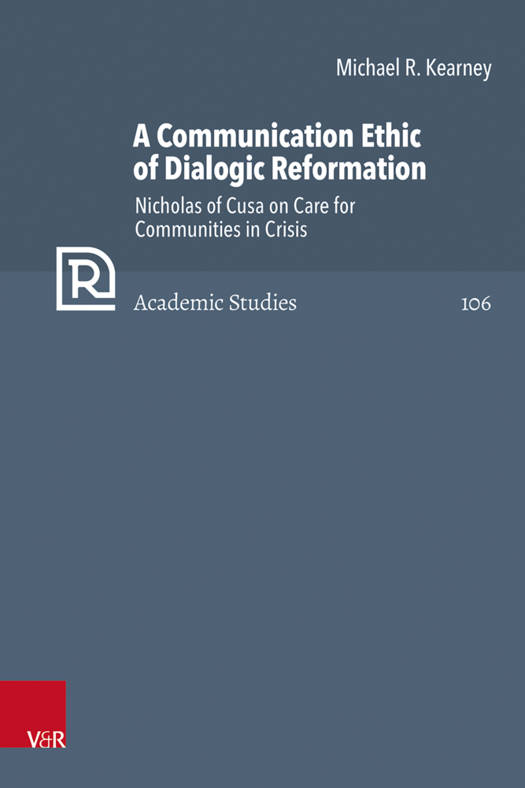
A Communication Ethic of Dialogic Reformation
Nicholas of Cusa on Care for Communities in Crisis
Michael R Kearney
€ 128,45
+ 256 punten
Uitvoering
Omschrijving
Calls for reformation were widespread across the medieval Roman Catholic Church, but few were as nuanced or philosophically rich as the lifelong work of Cardinal Nicholas of Cusa (1401-1464). Cusa centralized the coincidentia oppositorum, the coincidence of opposites, in our knowledge of God and the mystical institution of the Church. In his book, Michael R. Kearney traces Cusa's historical impact on philosophy of communication and communication ethics with an eye toward the health of institutions in a postmodern moment of cynicism and decline. Cusa loved the church and fought passionately for its reform, energized by the "clouded vision" of a God who is beyond opposites. This champion of dialogic reformation offers churches and communities an unfinished task with a unity of contraries at its heart: upholding local narrative ground with tenacious loyalty while working in an increasingly large world.
Specificaties
Betrokkenen
- Auteur(s):
- Uitgeverij:
Inhoud
- Aantal bladzijden:
- 230
- Taal:
- Engels
- Reeks:
- Reeksnummer:
- nr. 106
Eigenschappen
- Productcode (EAN):
- 9783525502167
- Verschijningsdatum:
- 10/03/2025
- Uitvoering:
- Hardcover
- Formaat:
- Genaaid
- Afmetingen:
- 154 mm x 230 mm
- Gewicht:
- 707981 g


Alleen bij Standaard Boekhandel
+ 256 punten op je klantenkaart van Standaard Boekhandel
CADEAU

AANGERADEN


Beoordelingen
We publiceren alleen reviews die voldoen aan de voorwaarden voor reviews. Bekijk onze voorwaarden voor reviews.