


- Afhalen na 1 uur in een winkel met voorraad
- Gratis thuislevering in België vanaf € 30
- Ruim aanbod met 7 miljoen producten
- Afhalen na 1 uur in een winkel met voorraad
- Gratis thuislevering in België vanaf € 30
- Ruim aanbod met 7 miljoen producten





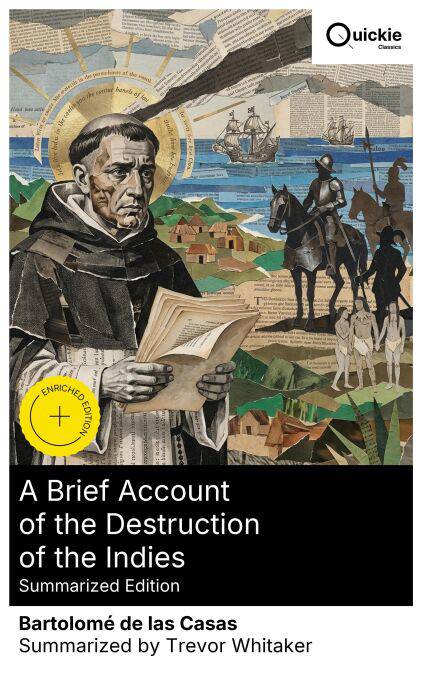
A Brief Account of the Destruction of the Indies (Summarized Edition) E-BOOK
Enriched edition. A Firsthand Indictment of Spanish Colonization, Indigenous Rights, and the Atrocities of European Empire
Bartolomé de las Casas
E-book | Engels
€ 1,99
+ 1 punten
Omschrijving
Bartolomé de las Casas's A Brief Account of the Destruction of the Indies (1552) is a juridical-pastoral indictment of Spain's conquest, addressed to the future Philip II. In terse, province-by-province vignettes—from Hispaniola and Cuba to New Spain and Peru—it catalogs massacres, enslavement, and the depopulating logic of encomienda. Apocalyptic yet forensic, it wields exempla, mortality estimates, and scriptural appeals to demand royal remedy. Situated in early modern debates on conquest and natural law, it later fed Europe's Black Legend. Seville-born and once an encomendero, Las Casas experienced the conquest firsthand before a 1514 conversion of conscience led him to renounce his grant and join the Dominicans. Trained in scholastic theology and canon law, later bishop of Chiapas, he pressed the Crown for reform, helped inspire the New Laws of 1542, and confronted Sepúlveda at Valladolid. This text distills decades of witnessing, pastoral labor, and legal argument. Students of colonial history, ethics, and political theology will find this brief indispensable. Read it critically—alert to polemical compression and occasional hyperbole—yet attentively, as a foundational plea for Indigenous rights and a bracing meditation on power, empire, and responsibility.
Quickie Classics summarizes timeless works with precision, preserving the author's voice and keeping the prose clear, fast, and readable—distilled, never diluted. Enriched Edition extras: Introduction · Synopsis · Historical Context · Author Biography · Brief Analysis · 4 Reflection Q&As · Editorial Footnotes.
Quickie Classics summarizes timeless works with precision, preserving the author's voice and keeping the prose clear, fast, and readable—distilled, never diluted. Enriched Edition extras: Introduction · Synopsis · Historical Context · Author Biography · Brief Analysis · 4 Reflection Q&As · Editorial Footnotes.
Specificaties
Betrokkenen
- Auteur(s):
- Uitgeverij:
Inhoud
- Aantal bladzijden:
- 62
- Taal:
- Engels
Eigenschappen
- Productcode (EAN):
- 8596547882336
- Verschijningsdatum:
- 9/01/2026
- Uitvoering:
- E-book
- Beveiligd met:
- Digital watermarking
- Formaat:
- ePub


Alleen bij Standaard Boekhandel
+ 1 punten op je klantenkaart van Standaard Boekhandel
Cadeau

AANGERADEN


Beoordelingen
We publiceren alleen reviews die voldoen aan de voorwaarden voor reviews. Bekijk onze voorwaarden voor reviews.