


- Afhalen na 1 uur in een winkel met voorraad
- Gratis thuislevering in België vanaf € 30
- Ruim aanbod met 7 miljoen producten
- Afhalen na 1 uur in een winkel met voorraad
- Gratis thuislevering in België vanaf € 30
- Ruim aanbod met 7 miljoen producten





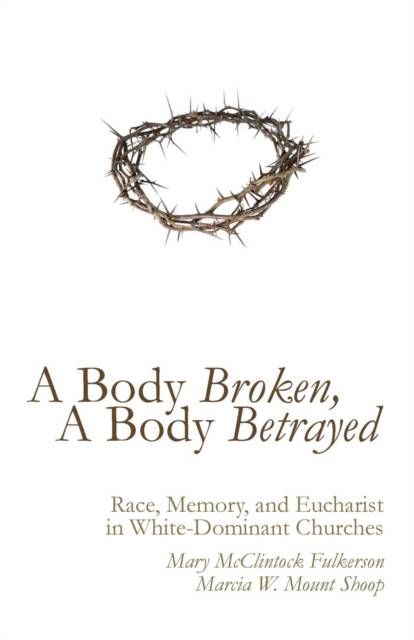
A Body Broken, a Body Betrayed
Race, Memory, and Eucharist in White-Dominant Churches
Mary McClintock Fulkerson, Marcia W Mount Shoop
Paperback | Engels
€ 24,95
+ 49 punten
Uitvoering
Omschrijving
Race and privilege are issues that cry out for new kinds of attention and healing in American society. More specifically, we are being called to surface the dynamics of whiteness especially in contexts where whites have had the most power in America. The church is one of those contexts--particularly churches that have traditionally been seen as the stalwarts of the American religious landscape: mainline Protestant churches. Theologians and Presbyterian ministers Mary McClintock Fulkerson and Marcia Mount Shoop invite us to acknowledge and address the wounds of race and privilege that continue to harm and diminish the life of the church. Using Eucharist as a template for both the church's blindness and for Christ's redemptive capacity, this book invites faith communities, especially white-dominant churches, into new ways of re-membering what it means to be the body of Christ. In a still racialized society, can the body of Christ truly acknowledge and dress the wounds of race and privilege? Re-membering Christ's broken and betrayed body may be just the healing path we need.
Specificaties
Betrokkenen
- Auteur(s):
- Uitgeverij:
Inhoud
- Aantal bladzijden:
- 106
- Taal:
- Engels
Eigenschappen
- Productcode (EAN):
- 9781620329047
- Verschijningsdatum:
- 28/10/2015
- Uitvoering:
- Paperback
- Formaat:
- Trade paperback (VS)
- Afmetingen:
- 137 mm x 211 mm
- Gewicht:
- 136 g



Alleen bij Standaard Boekhandel
+ 49 punten op je klantenkaart van Standaard Boekhandel
Cadeau

AANGERADEN


Beoordelingen
We publiceren alleen reviews die voldoen aan de voorwaarden voor reviews. Bekijk onze voorwaarden voor reviews.