


- Afhalen na 1 uur in een winkel met voorraad
- Gratis thuislevering in België vanaf € 30
- Ruim aanbod met 7 miljoen producten
- Afhalen na 1 uur in een winkel met voorraad
- Gratis thuislevering in België vanaf € 30
- Ruim aanbod met 7 miljoen producten





Omschrijving
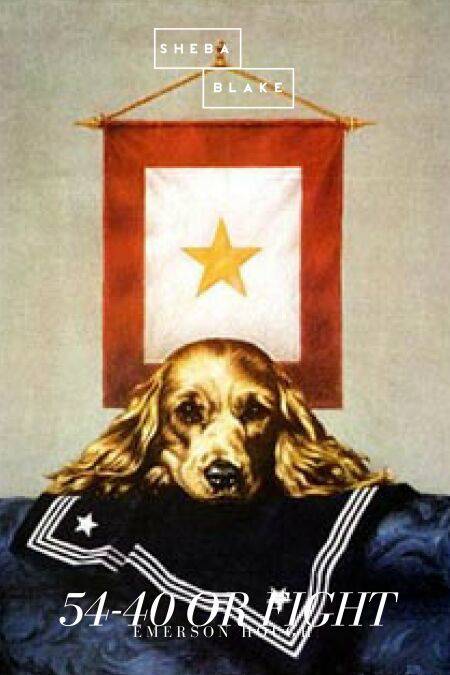
For much of the nineteenth century, the boundaries of the United States were in flux. Frontier lawyer turned Western writer Emerson Hough takes on the topic of one such border controversy in the novel 54-40 or Fight, an action-packed account of the campaign to wrest control of the Pacific Northwest from the British. Emerson Hough (1857–1923) was an American author best known for writing western stories and historical novels. Hough was born in Newton, Iowa on June 28, 1857. He was in Newton High School's first graduating class of three in 1875. He graduated from the University of Iowa with a bachelor's degree in philosophy in 1880 and later studied law and was admitted to the bar in 1882. His first article, "Far From The Madding Crowd," was published in Forest and Stream in 1882. He moved to White Oaks, New Mexico, practiced law there, and wrote for the White Oaks newspaper Golden Era for a year and a half, returning to Iowa when his mother was ill. He later wrote Story of the Outlaw, A Study of the Western Desperado, which included profiles of Billy the Kid and Pat Garrett. Hough moved to New Mexico after Garrett shot Billy the Kid, and he became a friend of Garrett. He wrote for various newspapers in Des Moines, Iowa, Sandusky, Ohio, Chicago, Illinois, St. Louis, Missouri, and Wichita, Kansas. In 1889 he got a position as western editor of Forest and Stream, editing the "Chicago and the West" column. He was hired by George Bird Grinnell, the owner of Field and Stream, who founded the Audubon Society in 1886 which, along with Theodore Roosevelt's Boone and Crockett Club, was a leader in the conservation movement.
Specificaties
Betrokkenen
- Auteur(s):
- Uitgeverij:
Inhoud
- Aantal bladzijden:
- 207
- Taal:
- Engels
Eigenschappen
- Productcode (EAN):
- 9783962177799
- Verschijningsdatum:
- 8/08/2017
- Uitvoering:
- E-book
- Formaat:
- ePub



Alleen bij Standaard Boekhandel
+ 3 punten op je klantenkaart van Standaard Boekhandel
Cadeau

AANGERADEN


Beoordelingen
We publiceren alleen reviews die voldoen aan de voorwaarden voor reviews. Bekijk onze voorwaarden voor reviews.