


- Afhalen na 1 uur in een winkel met voorraad
- Gratis thuislevering in België vanaf € 30
- Ruim aanbod met 7 miljoen producten
- Afhalen na 1 uur in een winkel met voorraad
- Gratis thuislevering in België vanaf € 30
- Ruim aanbod met 7 miljoen producten




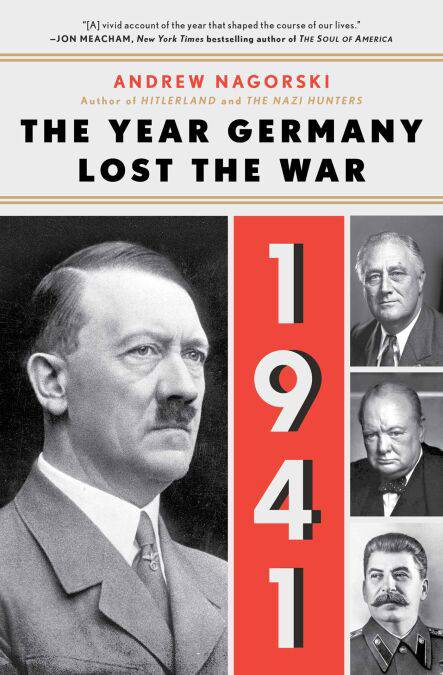
1941: The Year Germany Lost the War E-BOOK
The Year Germany Lost the War
Andrew Nagorski
E-book | Engels
€ 3,34
+ 3 punten
Uitvoering
Omschrijving
Bestselling historian Andrew Nagorski “brings keen psychological insights into the world leaders involved” (Booklist) during 1941, the critical year in World War II when Hitler’s miscalculations and policy of terror propelled Churchill, FDR, and Stalin into a powerful new alliance that defeated Nazi Germany.
In early 1941, Hitler’s armies ruled most of Europe. Churchill’s Britain was an isolated holdout against the Nazi tide, but German bombers were attacking its cities and German U-boats were attacking its ships. Stalin was observing the terms of the Nazi-Soviet Pact, and Roosevelt was vowing to keep the United States out of the war. Hitler was confident that his aim of total victory was within reach.
But by the end of 1941, all that changed. Hitler had repeatedly gambled on escalation and lost: by invading the Soviet Union and committing a series of disastrous military blunders; by making mass murder and terror his weapons of choice, and by rushing to declare war on the United States after Japan’s attack on Pearl Harbor. Britain emerged with two powerful new allies—Russia and the United States. By then, Germany was doomed to defeat.
Nagorski illuminates the actions of the major characters of this pivotal year as never before. 1941: The Year Germany Lost the War is a stunning and “entertaining” (The Wall Street Journal) examination of unbridled megalomania versus determined leadership. It also reveals how 1941 set the Holocaust in motion, and presaged the postwar division of Europe, triggering the Cold War. 1941 was “the year that shaped not only the conflict of the hour but the course of our lives—even now” (New York Times bestselling author Jon Meacham).
In early 1941, Hitler’s armies ruled most of Europe. Churchill’s Britain was an isolated holdout against the Nazi tide, but German bombers were attacking its cities and German U-boats were attacking its ships. Stalin was observing the terms of the Nazi-Soviet Pact, and Roosevelt was vowing to keep the United States out of the war. Hitler was confident that his aim of total victory was within reach.
But by the end of 1941, all that changed. Hitler had repeatedly gambled on escalation and lost: by invading the Soviet Union and committing a series of disastrous military blunders; by making mass murder and terror his weapons of choice, and by rushing to declare war on the United States after Japan’s attack on Pearl Harbor. Britain emerged with two powerful new allies—Russia and the United States. By then, Germany was doomed to defeat.
Nagorski illuminates the actions of the major characters of this pivotal year as never before. 1941: The Year Germany Lost the War is a stunning and “entertaining” (The Wall Street Journal) examination of unbridled megalomania versus determined leadership. It also reveals how 1941 set the Holocaust in motion, and presaged the postwar division of Europe, triggering the Cold War. 1941 was “the year that shaped not only the conflict of the hour but the course of our lives—even now” (New York Times bestselling author Jon Meacham).
Specificaties
Betrokkenen
- Auteur(s):
- Uitgeverij:
Inhoud
- Aantal bladzijden:
- 400
- Taal:
- Engels
Eigenschappen
- Productcode (EAN):
- 9781501181122
- Verschijningsdatum:
- 3/06/2019
- Uitvoering:
- E-book
- Beveiligd met:
- Adobe DRM
- Formaat:
- ePub


Alleen bij Standaard Boekhandel
+ 3 punten op je klantenkaart van Standaard Boekhandel
CADEAU


Beoordelingen
We publiceren alleen reviews die voldoen aan de voorwaarden voor reviews. Bekijk onze voorwaarden voor reviews.