


- Afhalen na 1 uur in een winkel met voorraad
- Gratis thuislevering in België vanaf € 30
- Ruim aanbod met 7 miljoen producten
- Afhalen na 1 uur in een winkel met voorraad
- Gratis thuislevering in België vanaf € 30
- Ruim aanbod met 7 miljoen producten





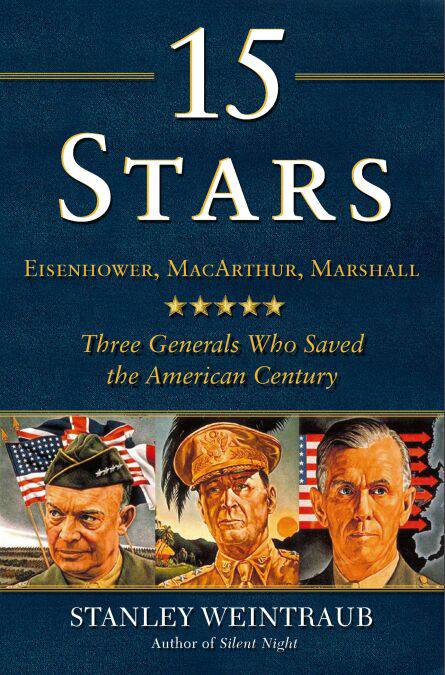
15 Stars E-BOOK
Eisenhower, MacArthur, Marshall: Three Generals Who Saved the American Century
Stanley Weintraub
E-book | Engels
€ 22,36
+ 22 punten
Uitvoering
Omschrijving
The sweeping and dramatic story of America's three great five-star generals, who steered America to victory through World War II and shaped the decade that followed, while jockeying against and helping one another as patrons, bosses, friends, and rivals.
In the closing days of World War II, America looked up to three five-star generals as its greatest heroes. George C. Marshall, Dwight D. Eisenhower, and Douglas MacArthur personified victory, from the Pentagon to Normandy to the Far East. Counterparts and on occasion competitors, they had leapfrogged each other, sometimes stonewalled each other, even supported and protected each other throughout their celebrated careers. In the public mind they stood for glamour, integrity, and competence. But for dramatic twists of circumstance, all three—rather than only one—might have occupied the White House.
The story of their interconnected lives opens a fascinating window onto some of the twentieth century's most crucial events, revealing the personalities behind the public images and showing how much of a difference three men can make. Marshall and MacArthur were contemporaries and competitors. Eisenhower was MacArthur's underling, then Marshall's deputy, before becoming MacArthur's counterpart as a supreme commander, Ike in Western Europe, MacArthur in the Pacific. Each of the three five-star generals would go on to extraordinary postwar careers: MacArthur as a virtual viceroy of Japan, overseeing its transition to a new constitutional democracy, and then leading the UN forces in the Korean War; Marshall as secretary of state, author of the Marshall Plan, and winner of the Nobel Peace Prize; Eisenhower as president.
Fifteen Stars presents the intertwined lives of these three great men against the sweeping background of six unforgettable decades, from two world wars to the Cold War. It is history at its most dramatic yet most personal—a triumph for Stanley Weintraub, our preeminent military historian.
In the closing days of World War II, America looked up to three five-star generals as its greatest heroes. George C. Marshall, Dwight D. Eisenhower, and Douglas MacArthur personified victory, from the Pentagon to Normandy to the Far East. Counterparts and on occasion competitors, they had leapfrogged each other, sometimes stonewalled each other, even supported and protected each other throughout their celebrated careers. In the public mind they stood for glamour, integrity, and competence. But for dramatic twists of circumstance, all three—rather than only one—might have occupied the White House.
The story of their interconnected lives opens a fascinating window onto some of the twentieth century's most crucial events, revealing the personalities behind the public images and showing how much of a difference three men can make. Marshall and MacArthur were contemporaries and competitors. Eisenhower was MacArthur's underling, then Marshall's deputy, before becoming MacArthur's counterpart as a supreme commander, Ike in Western Europe, MacArthur in the Pacific. Each of the three five-star generals would go on to extraordinary postwar careers: MacArthur as a virtual viceroy of Japan, overseeing its transition to a new constitutional democracy, and then leading the UN forces in the Korean War; Marshall as secretary of state, author of the Marshall Plan, and winner of the Nobel Peace Prize; Eisenhower as president.
Fifteen Stars presents the intertwined lives of these three great men against the sweeping background of six unforgettable decades, from two world wars to the Cold War. It is history at its most dramatic yet most personal—a triumph for Stanley Weintraub, our preeminent military historian.
Specificaties
Betrokkenen
- Auteur(s):
- Uitgeverij:
Inhoud
- Aantal bladzijden:
- 400
- Taal:
- Engels
Eigenschappen
- Productcode (EAN):
- 9781416545934
- Verschijningsdatum:
- 11/06/2007
- Uitvoering:
- E-book
- Beveiligd met:
- Adobe DRM
- Formaat:
- ePub


Alleen bij Standaard Boekhandel
+ 22 punten op je klantenkaart van Standaard Boekhandel
CADEAU


Beoordelingen
We publiceren alleen reviews die voldoen aan de voorwaarden voor reviews. Bekijk onze voorwaarden voor reviews.