


- Afhalen na 1 uur in een winkel met voorraad
- Gratis thuislevering in België vanaf € 30
- Ruim aanbod met 7 miljoen producten
- Afhalen na 1 uur in een winkel met voorraad
- Gratis thuislevering in België vanaf € 30
- Ruim aanbod met 7 miljoen producten





€ 2,23
+ 2 punten
Uitvoering
Omschrijving
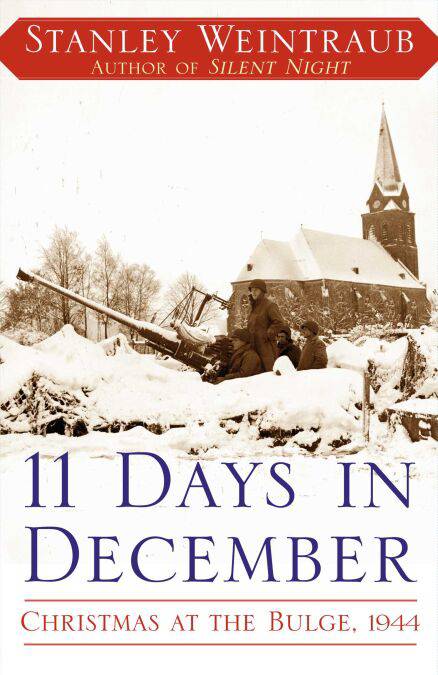
In 11 Days In December, master historian and biographer Stanley Weintraub tells the remarkable story of the Battle of the Bulge as it has never been told before, from frozen foxholes to barn shelters to boxcars packed with wretched prisoners of war.
In late December 1944, as the Battle of the Bulge neared its climax, a German loudspeaker challenge was blared across GI lines in the Ardennes: "How would you like to die for Christmas?" In the inhospitable forest straddling Belgium, France, and Luxembourg, only the dense, snow-laden evergreens recalled the season. Most troops hardly knew the calendar day they were trying to live through, or that it was Hitler's last, desperate effort to alter the war's outcome.
Yet the final Christmas season of World War II matched desperation with inspiration. When he was offered an ultimatum to surrender the besieged Belgian town of Bastogne, Brigadier General Anthony McAuliffe defied the Germans with the memorable one-word response, "Nuts!" And as General Patton prayed for clear skies to allow vital airborne reinforcements to reach his trapped men, he stood in a medieval chapel in Luxembourg and spoke to God as if to a commanding general: "Sir, whose side are you on?" His prayer was answered. The skies cleared, the tide of battle turned, and Allied victory in World War II was assured.
Christmas 1944 proved to be one of the most fateful days in world history. Many men did extraordinary things, and extraordinary things happened to ordinary men. "A clear cold Christmas," Patton told his diary, "lovely weather for killing Germans, which seems a bit queer, seeing whose birthday it is." Peace on earth and good will toward men would have to wait.
11 Days in December is unforgettable.
In late December 1944, as the Battle of the Bulge neared its climax, a German loudspeaker challenge was blared across GI lines in the Ardennes: "How would you like to die for Christmas?" In the inhospitable forest straddling Belgium, France, and Luxembourg, only the dense, snow-laden evergreens recalled the season. Most troops hardly knew the calendar day they were trying to live through, or that it was Hitler's last, desperate effort to alter the war's outcome.
Yet the final Christmas season of World War II matched desperation with inspiration. When he was offered an ultimatum to surrender the besieged Belgian town of Bastogne, Brigadier General Anthony McAuliffe defied the Germans with the memorable one-word response, "Nuts!" And as General Patton prayed for clear skies to allow vital airborne reinforcements to reach his trapped men, he stood in a medieval chapel in Luxembourg and spoke to God as if to a commanding general: "Sir, whose side are you on?" His prayer was answered. The skies cleared, the tide of battle turned, and Allied victory in World War II was assured.
Christmas 1944 proved to be one of the most fateful days in world history. Many men did extraordinary things, and extraordinary things happened to ordinary men. "A clear cold Christmas," Patton told his diary, "lovely weather for killing Germans, which seems a bit queer, seeing whose birthday it is." Peace on earth and good will toward men would have to wait.
11 Days in December is unforgettable.
Specificaties
Betrokkenen
- Auteur(s):
- Uitgeverij:
Inhoud
- Aantal bladzijden:
- 224
- Taal:
- Engels
Eigenschappen
- Productcode (EAN):
- 9780743298421
- Verschijningsdatum:
- 6/11/2006
- Uitvoering:
- E-book
- Beveiligd met:
- Adobe DRM
- Formaat:
- ePub


Alleen bij Standaard Boekhandel
+ 2 punten op je klantenkaart van Standaard Boekhandel
Cadeau

AANGERADEN


Beoordelingen
We publiceren alleen reviews die voldoen aan de voorwaarden voor reviews. Bekijk onze voorwaarden voor reviews.