


- Afhalen na 1 uur in een winkel met voorraad
- Gratis thuislevering in België vanaf € 30
- Ruim aanbod met 7 miljoen producten
- Afhalen na 1 uur in een winkel met voorraad
- Gratis thuislevering in België vanaf € 30
- Ruim aanbod met 7 miljoen producten





€ 162,95
+ 325 punten
Omschrijving
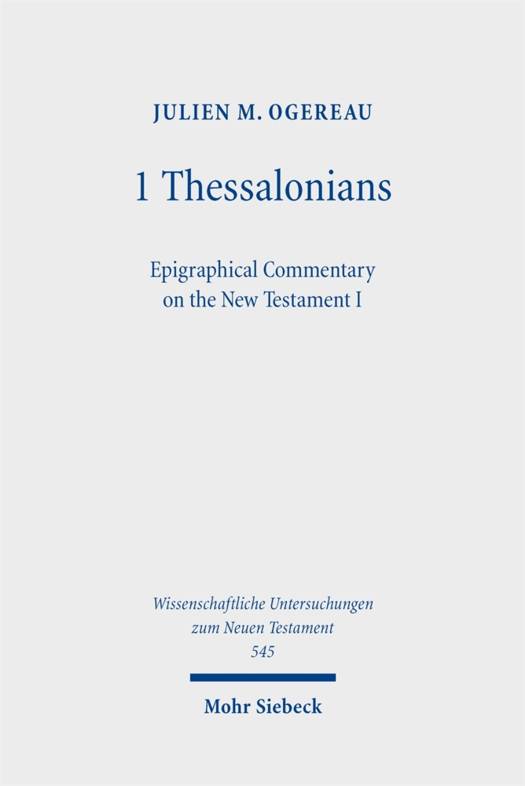
With this book, Julien M. Ogereau explores the apostle Paul's first Epistle to the Thessalonians through the perspective of Graeco-Roman epigraphy. Although scholars have frequently highlighted the significance of inscriptions for interpreting the New Testament, this commentary is the first to study systematically a New Testament text within the epigraphical context in which the author and recipients were linguistically and culturally embedded. Inscriptions indeed played a vital role in ancient society, both representing and shaping language use, including that of New Testament authors. This commentary features the epigraphic material that is considered to be the most enlightening on a particular lexeme, passage, or topic, and that is chronologically and geographically the closest to the location of the author and audience (e.g., inscriptions from Macedonia and Achaea dating from the first century AD). It examines the use of each lexeme in inscriptions and presents their relevance for the interpretation of a passage of the letter, in dialogue with current exegetical discussions. Each section on a particular passage begins with the Greek text and a translation that integrates the semantic insights derived from inscriptions. It then examines and discusses in detail the relevant epigraphic evidence for each important lexeme, or for the passage as a whole. Finally, each section concludes with a short summary that explores the potential meaning of the passage in light of the epigraphic material collected, both from the perspective of the author and from that of the audience.
Specificaties
Betrokkenen
- Auteur(s):
- Uitgeverij:
Inhoud
- Aantal bladzijden:
- 390
- Taal:
- Engels
- Reeks:
Eigenschappen
- Productcode (EAN):
- 9783161641367
- Verschijningsdatum:
- 31/10/2025
- Uitvoering:
- Hardcover
- Formaat:
- Genaaid
- Afmetingen:
- 155 mm x 231 mm
- Gewicht:
- 526 g


Alleen bij Standaard Boekhandel
+ 325 punten op je klantenkaart van Standaard Boekhandel
Cadeau

AANGERADEN


Beoordelingen
We publiceren alleen reviews die voldoen aan de voorwaarden voor reviews. Bekijk onze voorwaarden voor reviews.