


- Afhalen na 1 uur in een winkel met voorraad
- Gratis thuislevering in België vanaf € 30
- Ruim aanbod met 7 miljoen producten
- Afhalen na 1 uur in een winkel met voorraad
- Gratis thuislevering in België vanaf € 30
- Ruim aanbod met 7 miljoen producten





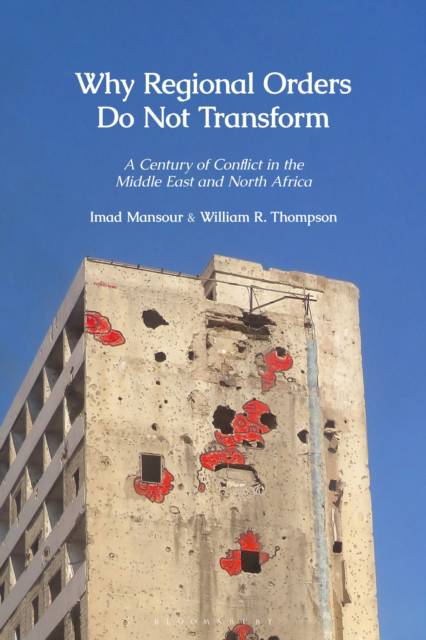
Why Regional Orders Do Not Transform
A Century of Conflict in the Middle East and North Africa
Imad Mansour, William R Thompson
Hardcover | Engels
€ 129,95
+ 259 punten
Omschrijving
MENA regional order has changed over the last century. However, there has been little structural transformation so existing rules and systems have not been altered. This book examines why despite so much change in the MENA - in the form of wars, economic decline and revival as well as massive societal uprisings - the regional order has not really moved beyond a conflict zone classification. Covering one hundred years from 1922 (the date of the partition of the Ottoman Empire) to 2022, the authors forward an analytical framework and suggest three phases in the regional order and what factors might move the MENA into another categorical order. The analysis offers important theoretical contributions on how dynamism and stasis in regional orders interact and the book offers a new understanding of the concepts of 'rivalry field' and 'conflict axis'.
Specificaties
Betrokkenen
- Auteur(s):
- Uitgeverij:
Inhoud
- Aantal bladzijden:
- 256
- Taal:
- Engels
Eigenschappen
- Productcode (EAN):
- 9780755658763
- Verschijningsdatum:
- 20/08/2026
- Uitvoering:
- Hardcover
- Formaat:
- Genaaid
- Afmetingen:
- 156 mm x 234 mm
- Gewicht:
- 453 g


Alleen bij Standaard Boekhandel
+ 259 punten op je klantenkaart van Standaard Boekhandel
Cadeau

AANGERADEN


Beoordelingen
We publiceren alleen reviews die voldoen aan de voorwaarden voor reviews. Bekijk onze voorwaarden voor reviews.