


- Afhalen na 1 uur in een winkel met voorraad
- Gratis thuislevering in België vanaf € 30
- Ruim aanbod met 7 miljoen producten
- Afhalen na 1 uur in een winkel met voorraad
- Gratis thuislevering in België vanaf € 30
- Ruim aanbod met 7 miljoen producten




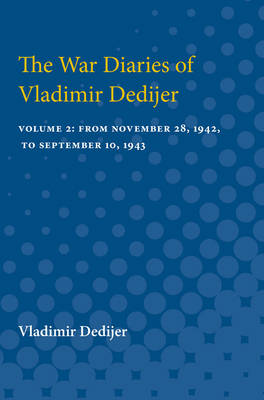
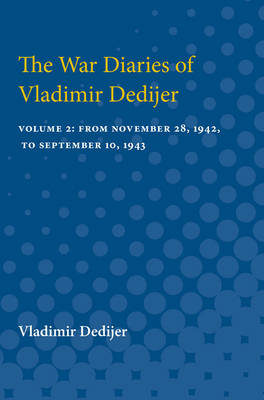
The War Diaries of Vladimir Dedijer
Volume 2: From November 28, 1942, to September 10, 1943
Vladimir Dedijer
Paperback | Engels
€ 86,45
+ 172 punten
Uitvoering
Omschrijving
After fleeing from occupied Beograd to the liberated territory in the Sumadija, Vladimir Dedijer began his life as a Yugoslavian Partisan. Commissioned at the request of then Commander Tito, Vladimir Dedijer began writing his diaries in April of 1941 to record the daily lives, battles, and casualties of the Yugoslavian Partisan Army. The War Diaries of Vladimir Dedijer represents a wealth of primary information about the lives and struggles of the Partisan brigades. There can be no complete understanding of Tito's Yugoslavia without knowing the Diaries' account of the extent of the Second World War's impact on Yugoslavia's people. Tito, who was a frequent reader of the Diaries as the Partisan Army fought across Yugoslavia, called this work "Our Great Obituary."To maintain a diary under the hardships of war was difficult. Among the hazards were river crossings, rain, self-censorship should the Germans find the diaries, and in many instances a shortage of ink. In fact, ink was in such demand that German supplies were targeted by Partisans during raids. Despite these difficulties, Dedijer continually recorded day-to-day life throughout the war. These three volumes contain his writings up to the liberation of Prague in November of 1944.The Diaries were originally published in Yugoslavia more than forty years ago, and have since gone through four editions. The original publication in 1945 caused great debate because of Dedijer's fierce commitment to speaking his views and his uncompromising dedication to recording what he lived. Many felt that Dedijer should not make public the names of Partisan heroes who supported Stalin during the bitter Stalin-Tito split, but in keeping with his values, Dedijer refused, with Tito supporting his decision.
Specificaties
Betrokkenen
- Auteur(s):
- Uitgeverij:
Inhoud
- Aantal bladzijden:
- 462
- Taal:
- Engels
Eigenschappen
- Productcode (EAN):
- 9780472751006
- Verschijningsdatum:
- 1/01/1990
- Uitvoering:
- Paperback
- Formaat:
- Trade paperback (VS)
- Afmetingen:
- 152 mm x 229 mm
- Gewicht:
- 671 g


Alleen bij Standaard Boekhandel
+ 172 punten op je klantenkaart van Standaard Boekhandel
CADEAU


Beoordelingen
We publiceren alleen reviews die voldoen aan de voorwaarden voor reviews. Bekijk onze voorwaarden voor reviews.