


- Afhalen na 1 uur in een winkel met voorraad
- Gratis thuislevering in België vanaf € 30
- Ruim aanbod met 7 miljoen producten
- Afhalen na 1 uur in een winkel met voorraad
- Gratis thuislevering in België vanaf € 30
- Ruim aanbod met 7 miljoen producten




Omschrijving
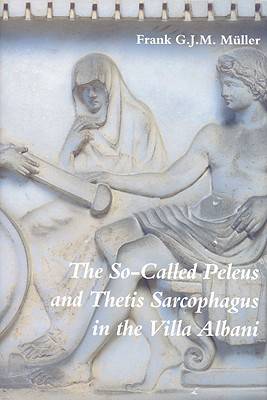
In this iconological study, the author demonstrates the invalidity of the current interpretation of the relief on the so-called Peleus and Thetis sarcophagus in the Villa Albani in Rome, an interpretation which goes back to Winckelmann. By applying a modern art-historical method, he arives at a fundamentally new interpretation. It becomes clear that the splendid sarcophagus in the Villa Albani is highly characteristic of 'academic' art of the Hadrianic era. The unique nature of the representation on the Albani sarcophagus, which consists mainly of allegorical figures, makes it an excellent point of entry for the interpretation of mythological scenes applied in a funerary context.
Specificaties
Betrokkenen
- Auteur(s):
- Uitgeverij:
Inhoud
- Aantal bladzijden:
- 179
- Taal:
- Engels
- Reeks:
- Reeksnummer:
- nr. 1
Eigenschappen
- Productcode (EAN):
- 9789050632461
- Verschijningsdatum:
- 1/01/1994
- Uitvoering:
- Hardcover
- Formaat:
- Genaaid
- Afmetingen:
- 157 mm x 229 mm
- Gewicht:
- 680 g


Alleen bij Standaard Boekhandel
+ 250 punten op je klantenkaart van Standaard Boekhandel
CADEAU


Beoordelingen
We publiceren alleen reviews die voldoen aan de voorwaarden voor reviews. Bekijk onze voorwaarden voor reviews.