


- Afhalen na 1 uur in een winkel met voorraad
- Gratis thuislevering in België vanaf € 30
- Ruim aanbod met 7 miljoen producten
- Afhalen na 1 uur in een winkel met voorraad
- Gratis thuislevering in België vanaf € 30
- Ruim aanbod met 7 miljoen producten





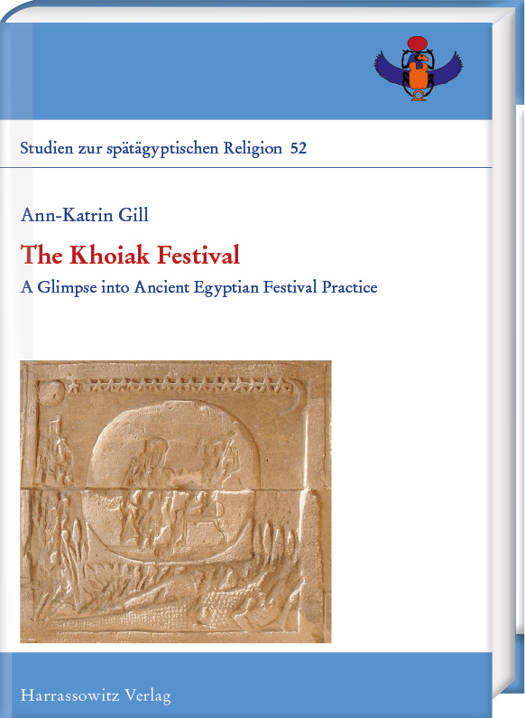
The Khoiak Festival
Ann-Katrin Gill
€ 127,95
+ 255 punten
Omschrijving
Ann-Katrin Gill presents the first comprehensive analysis of the so-called "Khoiak Festival", one of the most important festivals in ancient Egypt. Each year during the month of Khoiak (the fourth month of the inundation season), it was celebrated in honour of the god Osiris to commemorate his resurrection and guarantee the stability of the Egyptian state. The study is based primarily on two sources: the so-termed Dendera Khoiak Inscription in the first eastern Osiris chapel on the roof of the Hathor temple in Dendera and Papyrus Louvre N. 3176 (S). Hieroglyphic transcriptions as well as a complete transliteration and translation of these texts are provided, followed by a thorough commentary. In addition to 'official' writings that describe the festivities in detail, references to their representation on 'private' monuments and documents are discussed. Based on these and a variety of other sources, this study outlines a model or basic concept of what the Khoiak Festival might have looked like in Greco-Roman Period. This highlights correlations between ritual texts and cult architecture as well as links between text and archaeological artefacts, including temple structures on the one hand and objects connected with the festival on the other. Furthermore, the author examines at what point in Egyptian history the Khoiak Festival was established. Ultimately, this study contributes not only to a better understanding of the Khoiak Festival as such, but also to the festival cycle and belief system of the ancient Egyptians in general.
Specificaties
Betrokkenen
- Auteur(s):
- Uitgeverij:
Inhoud
- Taal:
- Engels
- Reeks:
- Reeksnummer:
- nr. 52
Eigenschappen
- Productcode (EAN):
- 9783447125598
- Verschijningsdatum:
- 15/06/2026
- Uitvoering:
- Hardcover
- Afmetingen:
- 210 mm x 297 mm


Alleen bij Standaard Boekhandel
+ 255 punten op je klantenkaart van Standaard Boekhandel
Cadeau

AANGERADEN


Beoordelingen
We publiceren alleen reviews die voldoen aan de voorwaarden voor reviews. Bekijk onze voorwaarden voor reviews.