


- Afhalen na 1 uur in een winkel met voorraad
- Gratis thuislevering in België vanaf € 30
- Ruim aanbod met 7 miljoen producten
- Afhalen na 1 uur in een winkel met voorraad
- Gratis thuislevering in België vanaf € 30
- Ruim aanbod met 7 miljoen producten





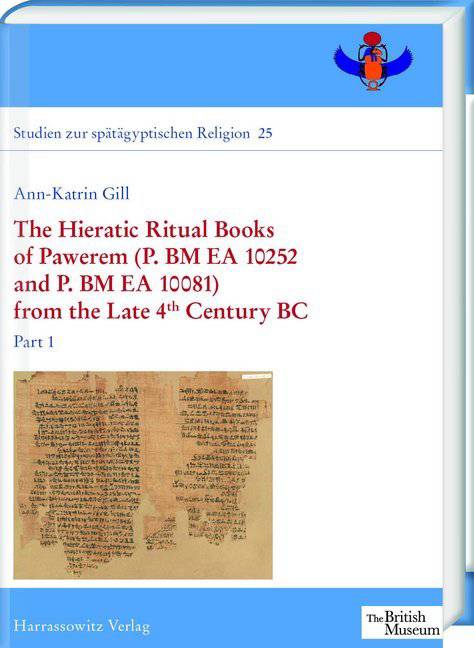
The Hieratic Ritual Books of Pawerem (P. Bm EA 10252 and P. Bm EA 10081) from the Late 4th Century BC
Part I + II
Ann-Katrin Gill
€ 244,45
+ 488 punten
Omschrijving
This monograph constitutes the first edition of the ritual texts preserved on two papyri now in the British Museum, namely EA 10252 and 10081, which are both of Theban origin. A scribal note on EA 10252 provides the date 307/6 BC. With an impressive length of 750 cm (50 preserved columns of text) for EA 10252, and 450 cm (37 columns) for EA 10081, these two documents comprise a total of no less than 15 different compositions. These are inscribed in hieratic and were later on glossed in hieratic as well as demotic, with a total of at least four different scribal hands attested on the documents. Originally, the two papyri formed one consecutive roll. The texts preserved on it can be connected to the Khoiak festival, the most important celebration of Osiris. At some point around 300 BC, this manuscript was adapted by the private individual Pawerem for his own benefit in the afterlife. In this book, the papyri are edited and published as an integral whole, with the omission of the so-called Glorifications I, II, and III in the edition. Along with the hieroglyphic transcription, transliteration, translation, and line-to-line commentary, overall questions are answered. These deal with the acquisition of the papyri, their material aspects, date and provenance, the layout of the texts, the different hands and scribal divisions attested on them, their later owner Pawerem, the details known about him and his connection to the papyri, a discussion of the content and context of the compositions, their grammar and orthography as well as an investigation of the translations and glosses. Furthermore, a palaeography, full photographic documentation, and synopses are provided.
Specificaties
Betrokkenen
- Auteur(s):
- Uitgeverij:
Inhoud
- Aantal bladzijden:
- 1076
- Taal:
- Engels
- Reeks:
- Reeksnummer:
- nr. 25
Eigenschappen
- Productcode (EAN):
- 9783447112390
- Verschijningsdatum:
- 7/08/2019
- Uitvoering:
- Hardcover
- Formaat:
- Genaaid
- Afmetingen:
- 214 mm x 311 mm
- Gewicht:
- 1319 g


Alleen bij Standaard Boekhandel
+ 488 punten op je klantenkaart van Standaard Boekhandel
Cadeau

AANGERADEN


Beoordelingen
We publiceren alleen reviews die voldoen aan de voorwaarden voor reviews. Bekijk onze voorwaarden voor reviews.