


- Afhalen na 1 uur in een winkel met voorraad
- Gratis thuislevering in België vanaf € 30
- Ruim aanbod met 7 miljoen producten
- Afhalen na 1 uur in een winkel met voorraad
- Gratis thuislevering in België vanaf € 30
- Ruim aanbod met 7 miljoen producten





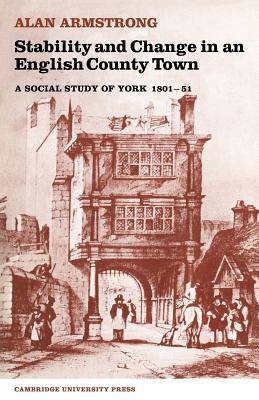
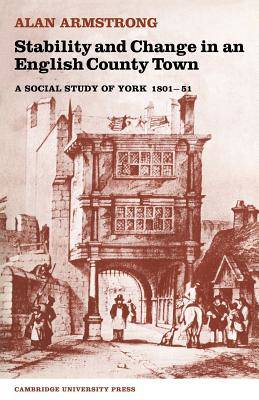
Stability and Change in an English County Town
A Social Study of York 1801 51
Alan Armstrong
Paperback | Engels
€ 74,95
+ 149 punten
Omschrijving
During the Industrial Revolution the attention of contemporaries was drawn inevitably towards conditions in the great manufacturing towns, a bias which most historical writing continues to perpetuate. By contrast, only scant attention has been paid to the development of older-established communities, although their stimulation during this period of transition is of compelling interest. County towns were by no means insulated from the broad currents of economic and social change at work in society, but in a large measure the forces of continuity and stability continued to shape their character. This detailed study of one of Britain's most notable historic towns concentrates on population growth by migration and natural increase, explores the course of marriage, birth and death rates, and concludes with an examination of household and family structure, based on the mid-nineteenth century census enumerators' returns.
Specificaties
Betrokkenen
- Auteur(s):
- Uitgeverij:
Inhoud
- Aantal bladzijden:
- 280
- Taal:
- Engels
Eigenschappen
- Productcode (EAN):
- 9780521019873
- Verschijningsdatum:
- 15/09/2005
- Uitvoering:
- Paperback
- Formaat:
- Trade paperback (VS)
- Afmetingen:
- 140 mm x 216 mm
- Gewicht:
- 358 g


Alleen bij Standaard Boekhandel
+ 149 punten op je klantenkaart van Standaard Boekhandel
CADEAU


Beoordelingen
We publiceren alleen reviews die voldoen aan de voorwaarden voor reviews. Bekijk onze voorwaarden voor reviews.