


- Afhalen na 1 uur in een winkel met voorraad
- Gratis thuislevering in België vanaf € 30
- Ruim aanbod met 7 miljoen producten
- Afhalen na 1 uur in een winkel met voorraad
- Gratis thuislevering in België vanaf € 30
- Ruim aanbod met 7 miljoen producten





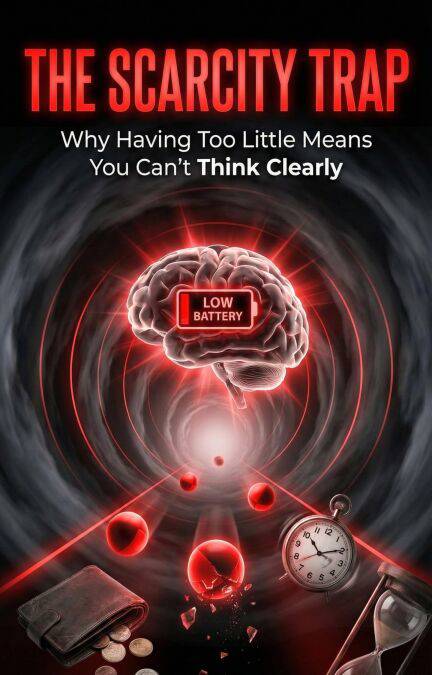
Scarcity Trap E-BOOK
Why Having Too Little Means You Can't Think Clearly
Alan Foster
E-book | Engels
€ 4,99
+ 4 punten
Omschrijving
Why do poor people take payday loans with 400% interest? Why do busy executives make terrible decisions about their health? We often blame these behaviors on a lack of discipline or education. But behavioral economist Sendhil Mullainathan and psychologist Eldar Shafir propose a different, radical theory: Scarcity itself lowers your IQ.
"The Scarcity Trap" explains that when your brain is obsessed with a lack of something—whether it's money, time, or calories—it "tunnels" on that immediate problem. This tunneling consumes massive amounts of cognitive bandwidth, effectively dropping your fluid intelligence by up to 13 points (equivalent to a night without sleep).
This book explores how this "bandwidth tax" leads to a vicious cycle of bad decisions that perpetuate the scarcity. It moves the conversation from "character flaws" to "design flaws" in our environment and offers structural solutions for escaping the trap. Whether you are drowning in debt or drowning in work, the psychology is the same: your brain is processing a shortage, not a life.
"The Scarcity Trap" explains that when your brain is obsessed with a lack of something—whether it's money, time, or calories—it "tunnels" on that immediate problem. This tunneling consumes massive amounts of cognitive bandwidth, effectively dropping your fluid intelligence by up to 13 points (equivalent to a night without sleep).
This book explores how this "bandwidth tax" leads to a vicious cycle of bad decisions that perpetuate the scarcity. It moves the conversation from "character flaws" to "design flaws" in our environment and offers structural solutions for escaping the trap. Whether you are drowning in debt or drowning in work, the psychology is the same: your brain is processing a shortage, not a life.
Specificaties
Betrokkenen
- Auteur(s):
- Uitgeverij:
Inhoud
- Aantal bladzijden:
- 147
- Taal:
- Engels
Eigenschappen
- Productcode (EAN):
- 9783565257232
- Verschijningsdatum:
- 17/02/2026
- Uitvoering:
- E-book
- Formaat:
- ePub


Alleen bij Standaard Boekhandel
+ 4 punten op je klantenkaart van Standaard Boekhandel
Cadeau

AANGERADEN


Beoordelingen
We publiceren alleen reviews die voldoen aan de voorwaarden voor reviews. Bekijk onze voorwaarden voor reviews.