


- Afhalen na 1 uur in een winkel met voorraad
- Gratis thuislevering in België vanaf € 30
- Ruim aanbod met 7 miljoen producten
- Afhalen na 1 uur in een winkel met voorraad
- Gratis thuislevering in België vanaf € 30
- Ruim aanbod met 7 miljoen producten





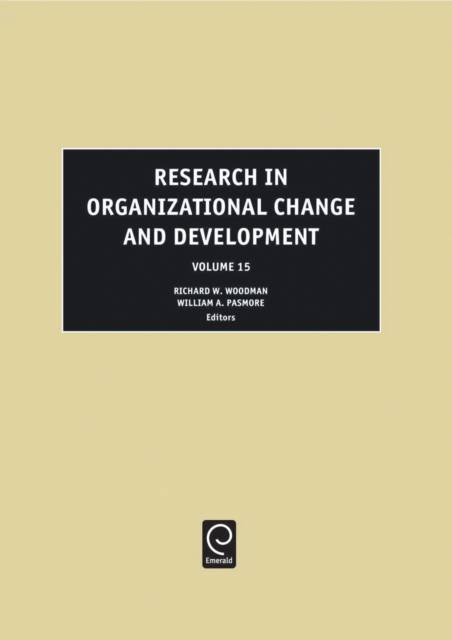
Research in Organizational Change and Development
€ 241,95
+ 483 punten
Omschrijving
The chapters in volume 15 of ROCD address a wide array of topics, challenges, and gaps in our knowledge of organizational change. Purser, Bluedorn and Petranker explore the dynamics of time in organizational change, proposing the use of the concept of "flow time." Falkenberg and her colleagues examine the issue of excessive change in organizations, which they define as the simultaneous pursuit of multiple unrelated changes. Real and Poole develop a framework for classifying approaches to conceptualizing and measuring innovation implementation. Roth provides a case description of knowledge creation stemming from a team composed of university, business, and consulting organizations.Ferdig and Ludema examine change via self-organizing processes at the U.S. National Regulatory Commission, the government agency that monitors nuclear reactors. Wischnevsky and Damanpour explore the punctuated equilibrium model of organizational transformation in the banking industry. Golembiewski and his colleagues address the application of organization development across cultures, specifically the use of OD within those cultures where Confucian ideas are prominent. Coghlan and Coughlan report on the CO-IMPROVE project - an action research initiative funded by the European Union. Finally, Yeager, Sorensen and Bengtsson assess the current state-of-the-use of appreciative inquiry in programs of organizational change.
Specificaties
Betrokkenen
- Uitgeverij:
Inhoud
- Aantal bladzijden:
- 229
- Taal:
- Engels
- Reeks:
- Reeksnummer:
- nr. 15
Eigenschappen
- Productcode (EAN):
- 9780762311675
- Verschijningsdatum:
- 22/02/2005
- Uitvoering:
- Hardcover
- Formaat:
- Genaaid
- Afmetingen:
- 162 mm x 228 mm
- Gewicht:
- 662 g


Alleen bij Standaard Boekhandel
+ 483 punten op je klantenkaart van Standaard Boekhandel
CADEAU


Beoordelingen
We publiceren alleen reviews die voldoen aan de voorwaarden voor reviews. Bekijk onze voorwaarden voor reviews.