


- Afhalen na 1 uur in een winkel met voorraad
- Gratis thuislevering in België vanaf € 30
- Ruim aanbod met 7 miljoen producten
- Afhalen na 1 uur in een winkel met voorraad
- Gratis thuislevering in België vanaf € 30
- Ruim aanbod met 7 miljoen producten





€ 18,95
+ 37 punten
Omschrijving
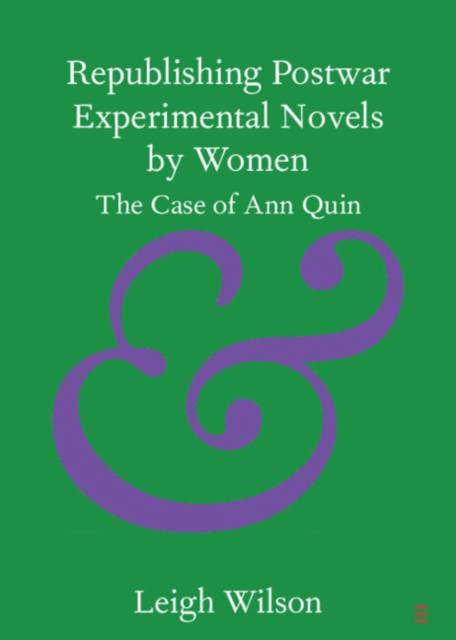
Innovative novels by women published in the UK in the 1950s and 1960s have returned with a vengeance in the last decade. They have reappeared in bookshops, they have been the subject of academic work, of newspaper articles and radio programmes. Feminist critical work is likely to see this return through the trope of recovery; those interested in publishing are likely to use Pierre Bourdieu's model of 'restricted production'. This Element argues that both of these temporal models are problematic. That these novelists have not been fully present in literary culture till now is the fault neither of 'forgetting' nor the time lag inherent in restricted production, but of the specific and complex structures, dynamics and assumptions of publishing. By focusing the publishing and republishing of the work of Ann Quin (1936-1973), this Element remakes the feminist critical landscape for work on novelists from the past and on publishing.
Specificaties
Betrokkenen
- Auteur(s):
- Uitgeverij:
Inhoud
- Aantal bladzijden:
- 75
- Taal:
- Engels
- Reeks:
Eigenschappen
- Productcode (EAN):
- 9781009560771
- Verschijningsdatum:
- 31/07/2026
- Uitvoering:
- Paperback
- Formaat:
- Trade paperback (VS)


Alleen bij Standaard Boekhandel
+ 37 punten op je klantenkaart van Standaard Boekhandel
Cadeau

AANGERADEN


Beoordelingen
We publiceren alleen reviews die voldoen aan de voorwaarden voor reviews. Bekijk onze voorwaarden voor reviews.