


- Afhalen na 1 uur in een winkel met voorraad
- Gratis thuislevering in België vanaf € 30
- Ruim aanbod met 7 miljoen producten
- Afhalen na 1 uur in een winkel met voorraad
- Gratis thuislevering in België vanaf € 30
- Ruim aanbod met 7 miljoen producten





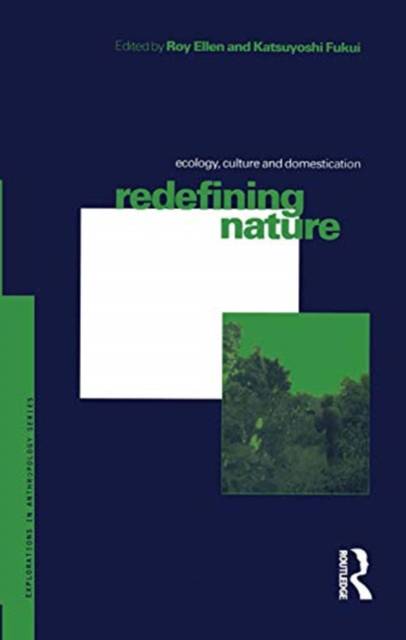
Redefining Nature
Ecology, Culture and Domestication
€ 305,45
+ 610 punten
Omschrijving
- How can anthropology improve our understanding of the interrelationship between nature and culture?- What can anthropology contribute to practical debates which depend on particular definitions of nature, such as that concerning sustainable development?Humankind has evolved over several million years by living in and utilizing 'nature' and by assimilating it into 'culture'. Indeed, the technological and cultural advancement of the species has been widely acknowledged to rest upon human domination and control of nature. Yet, by the 1960s, the idea of culture in confrontation with nature was being challenged by science, philosophy and the environmental movement. Anthropology is increasingly concerned with such issues as they become more urgent for humankind as a whole. This important book reviews the current state of the concepts of 'nature' we use, both as scientific devices and ideological constructs, and is organised around three themes: - nature as a cultural construction;- the cultural management of the environment; and- relations between plants, animals and humans.
Specificaties
Betrokkenen
- Uitgeverij:
Inhoud
- Aantal bladzijden:
- 688
- Taal:
- Engels
- Reeks:
Eigenschappen
- Productcode (EAN):
- 9780367719180
- Verschijningsdatum:
- 31/03/2021
- Uitvoering:
- Hardcover
- Formaat:
- Genaaid
- Afmetingen:
- 140 mm x 216 mm
- Gewicht:
- 938 g

Alleen bij Standaard Boekhandel
+ 610 punten op je klantenkaart van Standaard Boekhandel
Cadeau

AANGERADEN


Beoordelingen
We publiceren alleen reviews die voldoen aan de voorwaarden voor reviews. Bekijk onze voorwaarden voor reviews.