


- Afhalen na 1 uur in een winkel met voorraad
- Gratis thuislevering in België vanaf € 30
- Ruim aanbod met 7 miljoen producten
- Afhalen na 1 uur in een winkel met voorraad
- Gratis thuislevering in België vanaf € 30
- Ruim aanbod met 7 miljoen producten





€ 4,99
+ 4 punten
Uitvoering
Omschrijving
In 1881, a writer in the Saturday Review called tattooing ‘an art without a history’. ‘No-one’, it went on, ‘has made it the business of his life to study the development of tattooing.’
Until now.
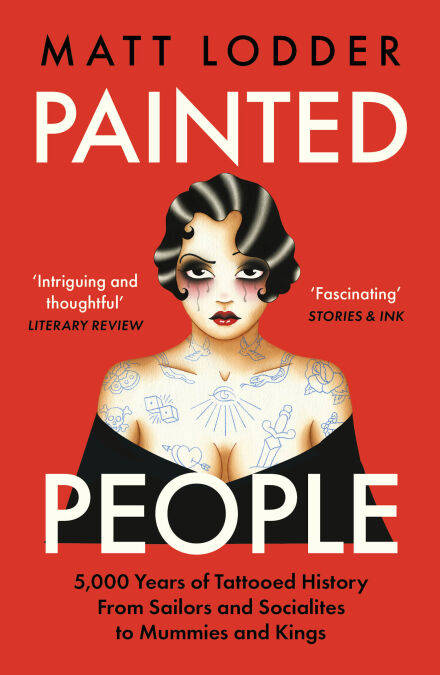
Painted People is a beguiling and intimate look at an untold history of humanity.
The earliest tattoos yet identified belonged to Ötzi, the ‘iceman’, whose mummy allows us a brief glimpse into the prehistory of the practice. We know that over the more than five thousand years since he was tattooed, countless cultures have performed this ancient practice, and people in every corner of the world have been tattooed. For the most part, these fascinating histories remain stubbornly untold, and the secrets of Siberian princesses, Chinese generals and Victorian socialites have been hidden on the skin, under layers of clothing and under layers of history. Now with access to a wealth of new and unreported material, this book will roll up its sleeves and reveal the artwork hidden beneath them.
In Painted People, Dr Matt Lodder, one of the world’s foremost experts on tattooing, tells the stories of people like Arnaq, who was tattooed in keeping with her cultural and religious traditions in sixteenth-century Canada, and Horace Ridler, who was tattooed as a means to make money in 1930s London. And in between these two extremes, he describes tattoos inked for love, for loyalty, for sedition and espionage and for self-expression, as well as tattoos inflicted on the unwilling, to ostracise. Taken together, these twenty-one tattoos paint a portrait of humanity as both artist and canvas.
Until now.
Painted People is a beguiling and intimate look at an untold history of humanity.
The earliest tattoos yet identified belonged to Ötzi, the ‘iceman’, whose mummy allows us a brief glimpse into the prehistory of the practice. We know that over the more than five thousand years since he was tattooed, countless cultures have performed this ancient practice, and people in every corner of the world have been tattooed. For the most part, these fascinating histories remain stubbornly untold, and the secrets of Siberian princesses, Chinese generals and Victorian socialites have been hidden on the skin, under layers of clothing and under layers of history. Now with access to a wealth of new and unreported material, this book will roll up its sleeves and reveal the artwork hidden beneath them.
In Painted People, Dr Matt Lodder, one of the world’s foremost experts on tattooing, tells the stories of people like Arnaq, who was tattooed in keeping with her cultural and religious traditions in sixteenth-century Canada, and Horace Ridler, who was tattooed as a means to make money in 1930s London. And in between these two extremes, he describes tattoos inked for love, for loyalty, for sedition and espionage and for self-expression, as well as tattoos inflicted on the unwilling, to ostracise. Taken together, these twenty-one tattoos paint a portrait of humanity as both artist and canvas.
Specificaties
Betrokkenen
- Auteur(s):
- Uitgeverij:
Inhoud
- Aantal bladzijden:
- 352
- Taal:
- Engels
Eigenschappen
- Productcode (EAN):
- 9780008402082
- Verschijningsdatum:
- 26/10/2022
- Uitvoering:
- E-book
- Beveiligd met:
- Adobe DRM
- Formaat:
- ePub


Alleen bij Standaard Boekhandel
+ 4 punten op je klantenkaart van Standaard Boekhandel
CADEAU


Beoordelingen
We publiceren alleen reviews die voldoen aan de voorwaarden voor reviews. Bekijk onze voorwaarden voor reviews.