


- Afhalen na 1 uur in een winkel met voorraad
- Gratis thuislevering in België vanaf € 30
- Ruim aanbod met 7 miljoen producten
- Afhalen na 1 uur in een winkel met voorraad
- Gratis thuislevering in België vanaf € 30
- Ruim aanbod met 7 miljoen producten




€ 9,23
+ 9 punten
Uitvoering
Omschrijving
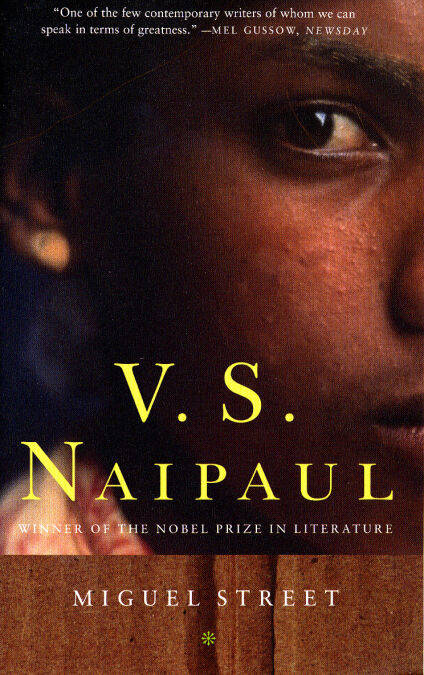
A tender, funny novel written with the verve of Dickens and the passion of Chekhov, set during World War II in a derelict neighborhood in Trinidad’s capital and narrated by an unnamed boy—from the Nobel Prize-winning author.
“One of the few contemporary writers of whom we can speak in terms of greatness.” —Newsday
“A stranger could drive through Miguel Street and just say ‘Slum!’ because he could see no more.” But to its residents this corner of Trinidad’s capital is a complete world, where everybody is quite different from everybody else. There’s Popo the carpenter, who neglects his livelihood to build “the thing without a name.” There’s Man-man, who goes from running for public office to staging his own crucifixion, and the dreaded Big Foot, the bully with glass tear ducts. There’s the lovely Mrs. Hereira, in thrall to her monstrous husband. This tender, funny early novel is a work of mercurial mood shifts, by turns sweetly melancholy and anarchically funny. It overflows with life on every page.
“One of the few contemporary writers of whom we can speak in terms of greatness.” —Newsday
“A stranger could drive through Miguel Street and just say ‘Slum!’ because he could see no more.” But to its residents this corner of Trinidad’s capital is a complete world, where everybody is quite different from everybody else. There’s Popo the carpenter, who neglects his livelihood to build “the thing without a name.” There’s Man-man, who goes from running for public office to staging his own crucifixion, and the dreaded Big Foot, the bully with glass tear ducts. There’s the lovely Mrs. Hereira, in thrall to her monstrous husband. This tender, funny early novel is a work of mercurial mood shifts, by turns sweetly melancholy and anarchically funny. It overflows with life on every page.
Specificaties
Betrokkenen
- Auteur(s):
- Uitgeverij:
Inhoud
- Aantal bladzijden:
- 224
- Taal:
- Engels
- Reeks:
Eigenschappen
- Productcode (EAN):
- 9780307776570
- Verschijningsdatum:
- 19/10/2010
- Uitvoering:
- E-book
- Beveiligd met:
- Adobe DRM
- Formaat:
- ePub


Alleen bij Standaard Boekhandel
+ 9 punten op je klantenkaart van Standaard Boekhandel
Cadeau

AANGERADEN


Beoordelingen
We publiceren alleen reviews die voldoen aan de voorwaarden voor reviews. Bekijk onze voorwaarden voor reviews.