


- Afhalen na 1 uur in een winkel met voorraad
- Gratis thuislevering in België vanaf € 30
- Ruim aanbod met 7 miljoen producten
- Afhalen na 1 uur in een winkel met voorraad
- Gratis thuislevering in België vanaf € 30
- Ruim aanbod met 7 miljoen producten





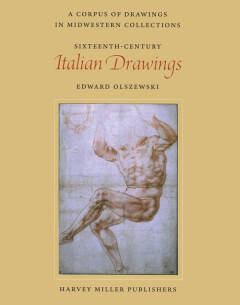
Italian Drawings from the Sixteenth Century
Edward J Olszewski
€ 80,38
+ 160 punten
Omschrijving
Paintings, sculpture, and classical antiquities are the most valuable resources of any museum, and are the first objects to be published in each museum's own collection catalogue or online inventory. Collection catalogues, however, have customarily included only a small sample of the riches to be found in Midwestern collections of master drawings. This volume of sixteenth-century drawings has been largely the work of Burton L. Dunbar (University of Missouri-Kansas City), director of the project and a specialist in the arts of northern Europe, and Edward J. Olszewski (Case Western Reserve University), co-editor for the series, a well-known authority on drawings of the Italian Renaissance. This volume covers the sixteenth century, including artists born as a rule between 1480 and 1580, with the exception of Giovanni Baglione (ca. 1573-1644) and the Carracci. This study represents a gathering of drawings from forty institutions between Ohio and Oklahoma based on a census of seventy-five museums and art centers. Jacob Burckhardt's contention that the Renaissance was, in many respects, an age of paganism is readily belied here by the 471 Italian drawings, the great majority of which are religious subjects. Antiquity provided a veneer beneath which sixteenth century artists could cloak their Christianity to make it seem fresh, reminding believers of the origins of their faith, and reviving the purity of Christian doctrine in its early years. It is no surprise, then, to find numerous drawings of antiquities, and mythologies among the many subjects. A corpus this large can be representative in many ways, offering a cross-section of media, subjects, drawing types, and collectors. Of the 471 Italian drawings scattered across Midwestern America, here we reassemble many that were at one time in one or more prominent collections. Every drawing was examined for the following information: Artist, place of birth and death with dates, biography, title of drawing, date of drawing, dimensions in mm (and in inches), media, institutional credit line, accession number, technical condition, inscriptions, collectors' marks, watermark, provenance, exhibitions, bibliography, comments.
Specificaties
Betrokkenen
- Auteur(s):
- Uitgeverij:
Inhoud
- Aantal bladzijden:
- 662
- Taal:
- Engels
- Reeks:
- Reeksnummer:
- nr. 1
Eigenschappen
- Productcode (EAN):
- 9781905375103
- Verschijningsdatum:
- 1/04/2008
- Uitvoering:
- Hardcover
- Formaat:
- Genaaid
- Afmetingen:
- 226 mm x 284 mm
- Gewicht:
- 3356 g


Alleen bij Standaard Boekhandel
+ 160 punten op je klantenkaart van Standaard Boekhandel
Cadeau

AANGERADEN


Beoordelingen
We publiceren alleen reviews die voldoen aan de voorwaarden voor reviews. Bekijk onze voorwaarden voor reviews.