


- Afhalen na 1 uur in een winkel met voorraad
- Gratis thuislevering in België vanaf € 30
- Ruim aanbod met 7 miljoen producten
- Afhalen na 1 uur in een winkel met voorraad
- Gratis thuislevering in België vanaf € 30
- Ruim aanbod met 7 miljoen producten





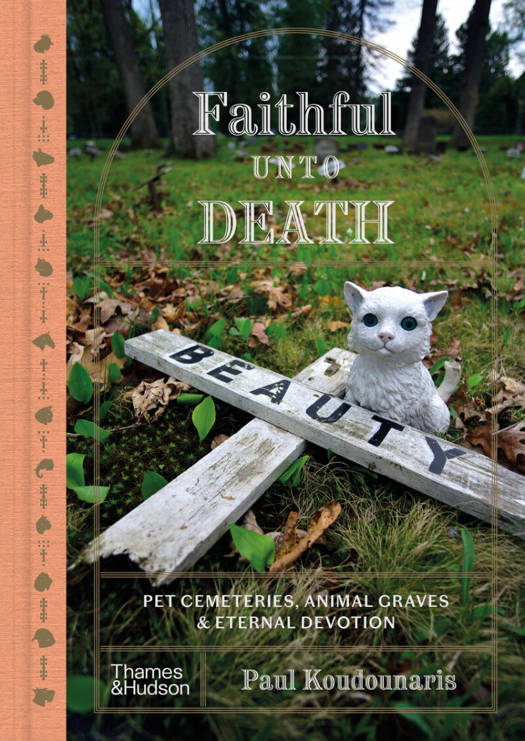
Faithful Unto Death
Pet Cemeteries, Animal Graves, and Eternal Devotion
Paul Koudounaris
Hardcover | Engels
€ 34,95
+ 69 punten
Omschrijving
When a little dog named Cherry died in 1881, his owners arranged for a grave in a nearby gatekeeper's garden in London. At this time, the idea that a pet, even one that had lived as a family member, might be given a dignified burial was considered comical. But when other pet owners--likewise determined to memorialize their companion animals--followed suit, the world's first urban pet cemetery was born. More soon followed across Europe, the United States, and then the rest of the world, resulting in a revolution in the way we consider animals. Faithful Unto Death tells the stories of people who gave their hearts to a disparate variety of species, yet were all united in one common belief: that the reward at death for a faithful animal companion should reflect the love it offered during life.
Losing a pet has always been a unique kind of pain. No set rituals exist to help provide closure when pets die, there are no readily shared passages from spiritual texts, no community of compassion to surround the mourner and help alleviate grief. And there is a sense of taboo, that it is somehow socially incorrect to mourn an animal as one would a person and feel the pain so intensely. Faithful Unto Death confronts this taboo by telling the stories of people who have memorialized their beloved animals.
The book addresses the moral and spiritual prejudices that have historically surrounded animals, and reveals how, in the face of these prejudices, a movement started in the nineteenth century to treat pets with dignity even in death. It is a fight that is still far from over, but the triumphs that are revealed as the book unfolds, found in burial grounds small to grand and on monuments humble to huge, possess the power to touch everyone who has ever cared for an animal companion. In tracing the historical evolution of pet cemeteries through the stories of the people and pets that have been integral to their development, this book reveals both similarities in the way we mourn animal companions and a stunning cultural diversity. From humble Cherry in London to pets of the rich and powerful, this is a history filled with inspiration, wild eccentricity, and eternal love.
Losing a pet has always been a unique kind of pain. No set rituals exist to help provide closure when pets die, there are no readily shared passages from spiritual texts, no community of compassion to surround the mourner and help alleviate grief. And there is a sense of taboo, that it is somehow socially incorrect to mourn an animal as one would a person and feel the pain so intensely. Faithful Unto Death confronts this taboo by telling the stories of people who have memorialized their beloved animals.
The book addresses the moral and spiritual prejudices that have historically surrounded animals, and reveals how, in the face of these prejudices, a movement started in the nineteenth century to treat pets with dignity even in death. It is a fight that is still far from over, but the triumphs that are revealed as the book unfolds, found in burial grounds small to grand and on monuments humble to huge, possess the power to touch everyone who has ever cared for an animal companion. In tracing the historical evolution of pet cemeteries through the stories of the people and pets that have been integral to their development, this book reveals both similarities in the way we mourn animal companions and a stunning cultural diversity. From humble Cherry in London to pets of the rich and powerful, this is a history filled with inspiration, wild eccentricity, and eternal love.
Specificaties
Betrokkenen
- Auteur(s):
- Uitgeverij:
Inhoud
- Aantal bladzijden:
- 256
- Taal:
- Engels
Eigenschappen
- Productcode (EAN):
- 9780500027516
- Verschijningsdatum:
- 1/10/2024
- Uitvoering:
- Hardcover
- Formaat:
- Genaaid
- Afmetingen:
- 173 mm x 241 mm
- Gewicht:
- 929 g


Alleen bij Standaard Boekhandel
+ 69 punten op je klantenkaart van Standaard Boekhandel
CADEAU


Beoordelingen
We publiceren alleen reviews die voldoen aan de voorwaarden voor reviews. Bekijk onze voorwaarden voor reviews.