


- Afhalen na 1 uur in een winkel met voorraad
- Gratis thuislevering in België vanaf € 30
- Ruim aanbod met 7 miljoen producten
- Afhalen na 1 uur in een winkel met voorraad
- Gratis thuislevering in België vanaf € 30
- Ruim aanbod met 7 miljoen producten





€ 86,45
+ 172 punten
Omschrijving
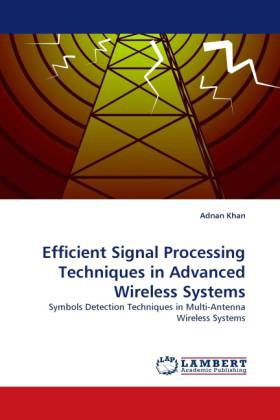
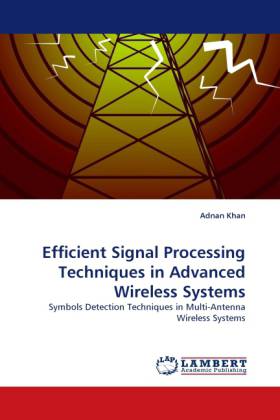
Significant performance gains are achievable in wireless systems using a Multi-Input Multi-Output (MIMO) communication system employing multiple antennas.This architecture is suitable for higher data rate multimedia communications.One of the challenges in building a MIMO system is the tremendous processing power required at the receiver. MIMO Symbol detection involves detecting symbol from a complex signal at the receiver. Nature Inspired techniques for non-linear approximate MIMO detectors with a low complexity near-optimal performance is presented. The approach is particularly attractive as Swarm Intelligence (SI) is well suited for physically realizable, real- time applications, where low complexity and fast convergence is of absolute importance. Application of Particle Swarm Optimization (PSO) and Ant Colony Optimization (ACO) algorithms is studied. While an optimal Maximum Likelihood (ML) detection using an exhaustive search method is prohibitively complex, it is established that Swarm Intelligence optimized MIMO detection algorithms gives near-optimal Bit Error Rate (BER) performance, thereby reducing the ML computational complexity significantly
Specificaties
Betrokkenen
- Auteur(s):
- Uitgeverij:
Inhoud
- Aantal bladzijden:
- 168
- Taal:
- Engels
Eigenschappen
- Productcode (EAN):
- 9783838374024
- Verschijningsdatum:
- 22/07/2010
- Uitvoering:
- Paperback
- Afmetingen:
- 152 mm x 229 mm
- Gewicht:
- 254 g


Alleen bij Standaard Boekhandel
+ 172 punten op je klantenkaart van Standaard Boekhandel
CADEAU


Beoordelingen
We publiceren alleen reviews die voldoen aan de voorwaarden voor reviews. Bekijk onze voorwaarden voor reviews.