


- Afhalen na 1 uur in een winkel met voorraad
- Gratis thuislevering in België vanaf € 30
- Ruim aanbod met 7 miljoen producten
- Afhalen na 1 uur in een winkel met voorraad
- Gratis thuislevering in België vanaf € 30
- Ruim aanbod met 7 miljoen producten





€ 8,99
+ 8 punten
Uitvoering
Omschrijving
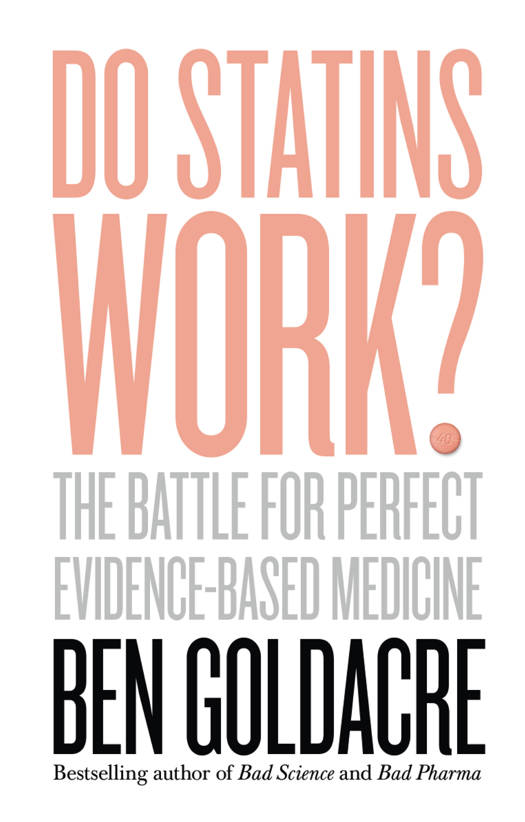
A campaigning handbook, a thrilling work of popular science, and a call to arms for doctors, researchers and patients from Britain’s finest writer on the science behind medicine.
Statins are the single most commonly prescribed class of drugs in the whole of the developed world. They’re taken by over 100 million people, with millions more patients being offered them every year.
We know that statins do some good. But we don’t know how big the benefits are. We don’t know which is the best. We don’t how common the side effects are. We don’t give clear information to patients, so they are deprived of their right to make informed decisions about the trade-off between benefits, inconvenience, and risk. All this can be fixed, with a few simple changes that weld big data onto the heart and art of medicine.
Drawing on his own research, Ben Goldacre gives patients the tools they need to make their own decisions. Along the way he explores industry misdeeds; the “nocebo” effect, the evil twin of the placebo effect, where side effects are caused by the power of fear alone; and the differences in patients’ desire for treatment, and doctors’ failures to empathise with these. With his characteristic wit and energy, Goldacre exposes the flaws in modern medicine, and the future it deserves.
Statins are the single most commonly prescribed class of drugs in the whole of the developed world. They’re taken by over 100 million people, with millions more patients being offered them every year.
We know that statins do some good. But we don’t know how big the benefits are. We don’t know which is the best. We don’t how common the side effects are. We don’t give clear information to patients, so they are deprived of their right to make informed decisions about the trade-off between benefits, inconvenience, and risk. All this can be fixed, with a few simple changes that weld big data onto the heart and art of medicine.
Drawing on his own research, Ben Goldacre gives patients the tools they need to make their own decisions. Along the way he explores industry misdeeds; the “nocebo” effect, the evil twin of the placebo effect, where side effects are caused by the power of fear alone; and the differences in patients’ desire for treatment, and doctors’ failures to empathise with these. With his characteristic wit and energy, Goldacre exposes the flaws in modern medicine, and the future it deserves.
Specificaties
Betrokkenen
- Auteur(s):
- Uitgeverij:
Inhoud
- Aantal bladzijden:
- 304
- Taal:
- Engels
Eigenschappen
- Productcode (EAN):
- 9780008133658
- Uitvoering:
- E-book
- Beveiligd met:
- Adobe DRM
- Formaat:
- ePub


Alleen bij Standaard Boekhandel
+ 8 punten op je klantenkaart van Standaard Boekhandel
CADEAU


Beoordelingen
We publiceren alleen reviews die voldoen aan de voorwaarden voor reviews. Bekijk onze voorwaarden voor reviews.