


- Afhalen na 1 uur in een winkel met voorraad
- Gratis thuislevering in België vanaf € 30
- Ruim aanbod met 7 miljoen producten
- Afhalen na 1 uur in een winkel met voorraad
- Gratis thuislevering in België vanaf € 30
- Ruim aanbod met 7 miljoen producten





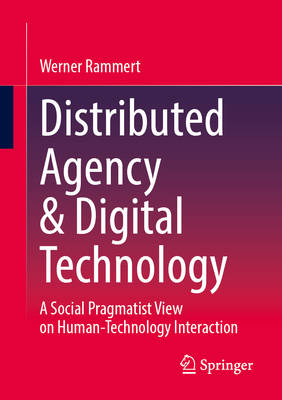
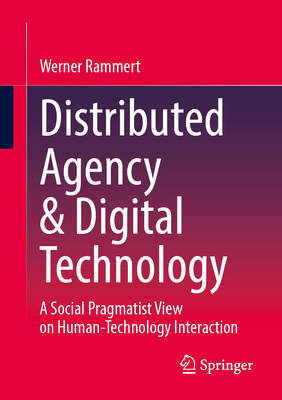
Distributed Agency & Digital Technology
A Social Pragmatist View on Human-Technology Interaction
Werner Rammert
Paperback | Engels
€ 96,45
+ 192 punten
Omschrijving
Understanding the specific active role of computer and artificial intelligence technologies in the digital transformation of society is among the most crucial issues in social sciences and computing today. In "Distributed Agency & Digital Technology", Werner Rammert introduces a post-ANT sociological research program presenting a fresh perspective on "where the action is" in sociotechnical constellations and "how autonomy and control are distributed and attributed across diverse agencies". Reviewing critical technological changes and foundational insights of social theorizing and STS research over the last three decades, the author develops a non-dualist and performative view on the constitution of society through interactions between the human, material, and digital sides. He also provides an up-dated pragmatic theory of technology that combines a processual concept of technization and a relational one of hybrid media constellations. These concepts contribute fundamentally to discourses on human agency, pragmatic interaction, socio-materiality, and material semiotics as well as to designs of software and embodied (robotic) agents, interactivity at interfaces, and intra-actions in distributed systems. Multidisciplinary case studies on the design, development and uses of computers and artificial intelligence in various fields (human-computer-interaction, air traffic control, autonomous car driving, video-surveillance, expert and multi-agent-systems) demonstrate the value of this social pragmatist approach to problem-based theorizing and concept-probing inquiry.
Specificaties
Betrokkenen
- Auteur(s):
- Uitgeverij:
Inhoud
- Aantal bladzijden:
- 312
- Taal:
- Engels
Eigenschappen
- Productcode (EAN):
- 9783658487867
- Verschijningsdatum:
- 28/08/2025
- Uitvoering:
- Paperback
- Formaat:
- Trade paperback (VS)
- Afmetingen:
- 148 mm x 210 mm
- Gewicht:
- 394 g


Alleen bij Standaard Boekhandel
+ 192 punten op je klantenkaart van Standaard Boekhandel
Cadeau

AANGERADEN


Beoordelingen
We publiceren alleen reviews die voldoen aan de voorwaarden voor reviews. Bekijk onze voorwaarden voor reviews.