


- Afhalen na 1 uur in een winkel met voorraad
- Gratis thuislevering in België vanaf € 30
- Ruim aanbod met 7 miljoen producten
- Afhalen na 1 uur in een winkel met voorraad
- Gratis thuislevering in België vanaf € 30
- Ruim aanbod met 7 miljoen producten





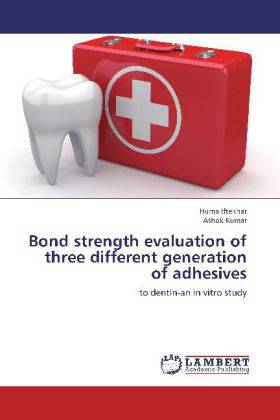
Bond strength evaluation of three different generation of adhesives
to dentin-an in vitro study
Huma Iftekhar, Ashok Kumar
Paperback | Engels
€ 48,45
+ 96 punten
Omschrijving
The widespread demand for, and use of dental adhesives has fueled an intense development of better and easier dental adhesives in rapid succession and dentists have literally been inundated with successive generations of adhesive materials. The generational definitions help in identification of chemistries involved, the strength of dentinal bond and the ease of use for the practitioner.The clinical use of resin composites has expanded considerably over the past few years due to increased esthetic demands by patients, new improved formulations and simplification of bonding procedures. Evaluation of bond strength provides a screening mechanism use of adhesives and an indication of the potential for their clinical success.the purpose of this study was to find and compare the shear bond strength of three different generation of adhesive systems fifth, sixth and seventh to dentin of human molars using same composite.
Specificaties
Betrokkenen
- Auteur(s):
- Uitgeverij:
Inhoud
- Aantal bladzijden:
- 88
- Taal:
- Engels
Eigenschappen
- Productcode (EAN):
- 9783845438405
- Verschijningsdatum:
- 24/12/2012
- Uitvoering:
- Paperback
- Afmetingen:
- 150 mm x 220 mm
- Gewicht:
- 141 g


Alleen bij Standaard Boekhandel
+ 96 punten op je klantenkaart van Standaard Boekhandel
Cadeau

AANGERADEN


Beoordelingen
We publiceren alleen reviews die voldoen aan de voorwaarden voor reviews. Bekijk onze voorwaarden voor reviews.