


- Afhalen na 1 uur in een winkel met voorraad
- Gratis thuislevering in België vanaf € 30
- Ruim aanbod met 7 miljoen producten
- Afhalen na 1 uur in een winkel met voorraad
- Gratis thuislevering in België vanaf € 30
- Ruim aanbod met 7 miljoen producten





Omschrijving
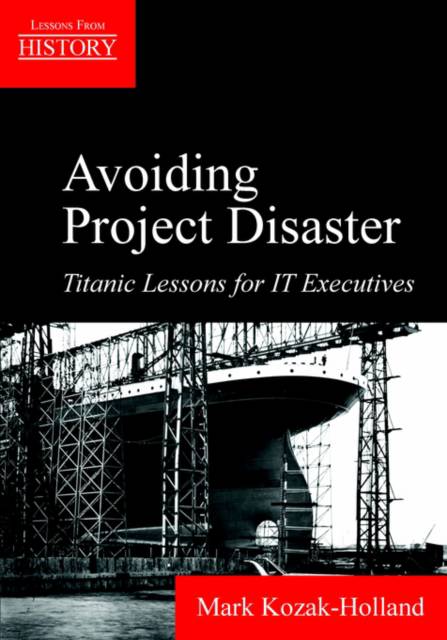
Titanic's maiden voyage was a disaster waiting to happen as a result of the compromises made in the project. This book explores how non-IT executives can take lessons from a nuts-and-bolts construction project like Titanic and use those lessons to ensure the right approach to developing on-line operations. Looking at this historical project as a model cuts away the layers of IT jargon and complexity. Avoiding Project Disaster is about delivering IT projects in a world where on-time and on-budget is not enough. It will help you successfully maneuver through the ice floes of IT project management in an industry with a notoriously high project failure rate. This book outlines the stages involved in creating mission critical services and the underlying environment to support these. Specifically, the book provides the non-technical manager a step-by-step guide to the deliverables that the IT department should produce at each stage of the creation process. The book enlightens the non-technical manager to the fact that a considerable part of the effort is in realigning the organization and procedures rather than technology. Knowing the rationale for and the timing of deliverables enables the non-IT manager to be a full participant in the creation process. The book leaves the reader with a simple philosophy: namely, focus your IT investments on getting your organization and procedures aligned and you can get best-in-class results from your technology. The book uses close to 90 figures and more than 40 tables for clarification of major concepts through detailed models, e.g., Change Management (9-step model) and Problem Management (4-step model).
Specificaties
Betrokkenen
- Auteur(s):
- Uitgeverij:
Inhoud
- Aantal bladzijden:
- 312
- Taal:
- Engels
- Reeks:
Eigenschappen
- Productcode (EAN):
- 9781895186734
- Verschijningsdatum:
- 1/07/2006
- Uitvoering:
- Paperback
- Formaat:
- Trade paperback (VS)
- Afmetingen:
- 178 mm x 254 mm
- Gewicht:
- 544 g



Alleen bij Standaard Boekhandel
+ 71 punten op je klantenkaart van Standaard Boekhandel
Cadeau

AANGERADEN


Beoordelingen
We publiceren alleen reviews die voldoen aan de voorwaarden voor reviews. Bekijk onze voorwaarden voor reviews.