


- Afhalen na 1 uur in een winkel met voorraad
- Gratis thuislevering in België vanaf € 30
- Ruim aanbod met 7 miljoen producten
- Afhalen na 1 uur in een winkel met voorraad
- Gratis thuislevering in België vanaf € 30
- Ruim aanbod met 7 miljoen producten




Omschrijving
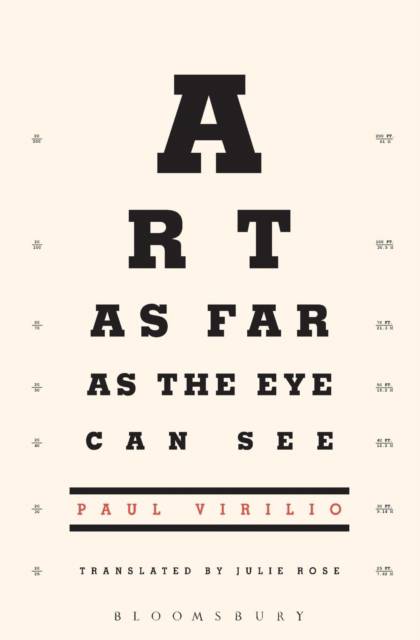
Paul Virilio puts art back where it matters - at the centre of politics. Art used to be an engagement between artist and materials. But in our new media world art has changed, its very materials have changed and have become technologized.
This change reflects a broader social shift. Speed and politics - what Virilio defined as the key characteristics of the twentieth century - have been transformed in the twenty-first century to speed and mass culture. And the defining characteristic of mass culture today is panic.
This induced panic relies on a new, all-seeing technology. And the first casualty of this is the human response. What we are losing is the very human 'art of seeing', one individual's engagement with another or with an event, be that political or artistic. What we are losing is our sense of the aesthetic. Where art used to talk of the aesthetics of disappearance, it must now confront the disappearance of the aesthetic.
This change reflects a broader social shift. Speed and politics - what Virilio defined as the key characteristics of the twentieth century - have been transformed in the twenty-first century to speed and mass culture. And the defining characteristic of mass culture today is panic.
This induced panic relies on a new, all-seeing technology. And the first casualty of this is the human response. What we are losing is the very human 'art of seeing', one individual's engagement with another or with an event, be that political or artistic. What we are losing is our sense of the aesthetic. Where art used to talk of the aesthetics of disappearance, it must now confront the disappearance of the aesthetic.
Specificaties
Betrokkenen
- Auteur(s):
- Vertaler(s):
- Uitgeverij:
Inhoud
- Aantal bladzijden:
- 144
- Taal:
- Engels
Eigenschappen
- Productcode (EAN):
- 9781847885401
- Verschijningsdatum:
- 1/03/2010
- Uitvoering:
- Paperback
- Formaat:
- Trade paperback (VS)
- Afmetingen:
- 132 mm x 185 mm
- Gewicht:
- 158 g


Alleen bij Standaard Boekhandel
+ 96 punten op je klantenkaart van Standaard Boekhandel
CADEAU


Beoordelingen
We publiceren alleen reviews die voldoen aan de voorwaarden voor reviews. Bekijk onze voorwaarden voor reviews.