


- Afhalen na 1 uur in een winkel met voorraad
- Gratis thuislevering in België vanaf € 30
- Ruim aanbod met 7 miljoen producten
- Afhalen na 1 uur in een winkel met voorraad
- Gratis thuislevering in België vanaf € 30
- Ruim aanbod met 7 miljoen producten





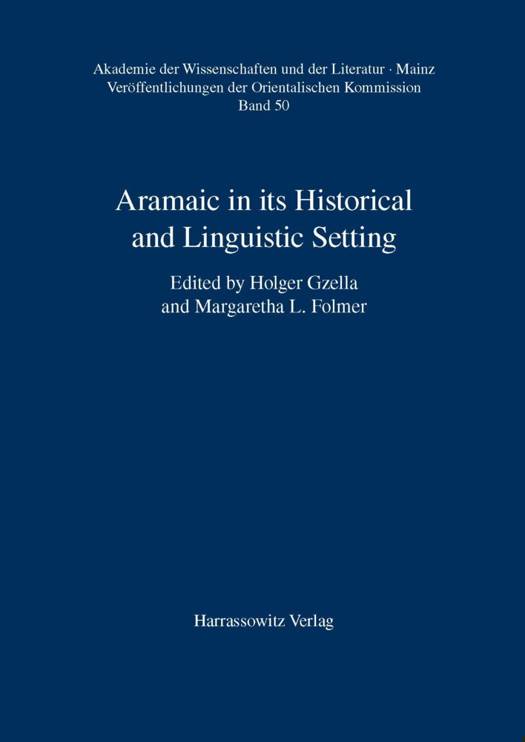
Aramaic in Its Historical and Linguistic Setting
Paperback | Engels | Veröffentlichungen der Orientalischen Kommission (Vok) der Akademie der Wissenschaften Und der Liter | nr. 50
€ 55,95
+ 111 punten
Omschrijving
This volume contains contributions by W. Arnold, S.E. Fassberg, M.L. Folmer, W.R. Garr, A. Gianto, H. Gzella, J.F. Healey, O. Jastrow, J. Joosten, O. Kapeliuk, S.A. Kaufman, G. Khan, R. Kuty, A. Lemaire, E. Lipinski, H.L. Murre-van den Berg, C. Morrison, N. Pat-El, W.Th. van Peursen, and A. Tal. They discuss central issues of Aramaic linguistics in the light of the most recent research: editions of primary source material; extensive historical and linguistic overviews on matters of classification and language change; detailed studies of grammatical and lexical topics analyzing data from different Aramaic languages, for instance determination and tense-aspect-modality systems. Several papers closely interact with each other. As a whole, they bridge the gap between ancient and modern forms of Aramaic by providing a more comprehensive approach to this language group and its attested history of three millennia. Thanks to a sharp thematic focus, wide-ranging discussions of a great amount of material, and up-to-date theoretical frameworks, these proceedings can also act as a modern handbook of Aramaic in all its complexity. All articles are thematically arranged, fully indexed and cross-referenced.
Specificaties
Betrokkenen
- Uitgeverij:
Inhoud
- Aantal bladzijden:
- 388
- Taal:
- Engels
- Reeks:
- Reeksnummer:
- nr. 50
Eigenschappen
- Productcode (EAN):
- 9783447057875
- Verschijningsdatum:
- 1/07/2008
- Uitvoering:
- Paperback
- Formaat:
- Trade paperback (VS)
- Afmetingen:
- 169 mm x 240 mm
- Gewicht:
- 747 g

Alleen bij Standaard Boekhandel
+ 111 punten op je klantenkaart van Standaard Boekhandel
Cadeau

AANGERADEN


Beoordelingen
We publiceren alleen reviews die voldoen aan de voorwaarden voor reviews. Bekijk onze voorwaarden voor reviews.