


- Afhalen na 1 uur in een winkel met voorraad
- Gratis thuislevering in België vanaf € 30
- Ruim aanbod met 7 miljoen producten
- Afhalen na 1 uur in een winkel met voorraad
- Gratis thuislevering in België vanaf € 30
- Ruim aanbod met 7 miljoen producten




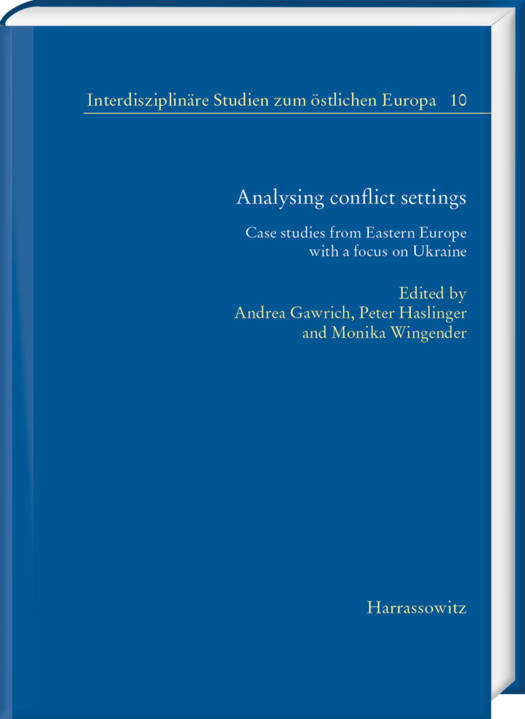
Analysing Conflict Settings
Case Studies from Eastern Europe with a Focus on Ukraine
€ 159,45
+ 318 punten
Omschrijving
Since Russia's war of aggression against Ukraine in 2022, Eastern Europe has once again become the focus of attention as a conflict region. At the same time, the enormous need for interpretive knowledge regarding Ukraine in the humanities and cultural studies is all the more apparent. As the example of the failed revolution in Belarus in 2020 also illustrates, an adequate understanding of Eastern Europe requires placing events within their broader political, cultural and historical context. This volume examines a variety of relevant dimensions: interstate, linguistic-national or interethnic conflict situations are elaborated with the aim of providing insights into the complex structures of conflicts. The volume deals with the repercussions of conflict situations on the societies concerned, the underlying language and spatial images or the conflict management of international organisations, among other topics. Seven of the fifteen contributions are devoted to the situation in Ukraine and are supplemented by spotlights on Belarus, Poland, the Balkans and Kazakhstan. This volume presents the research results of the interdisciplinary research project "Conflict Regions in Eastern Europe", which fostered an intensive cooperation between researchers in linguistics, history, political science and sociology, as well as by the close involvement of Ukrainian scholars.
Specificaties
Betrokkenen
- Uitgeverij:
Inhoud
- Aantal bladzijden:
- 352
- Taal:
- Engels
- Reeks:
- Reeksnummer:
- nr. 10
Eigenschappen
- Productcode (EAN):
- 9783447117715
- Verschijningsdatum:
- 29/03/2023
- Uitvoering:
- Hardcover
- Formaat:
- Genaaid
- Afmetingen:
- 174 mm x 25 mm
- Gewicht:
- 326 g

Alleen bij Standaard Boekhandel
+ 318 punten op je klantenkaart van Standaard Boekhandel
CADEAU


Beoordelingen
We publiceren alleen reviews die voldoen aan de voorwaarden voor reviews. Bekijk onze voorwaarden voor reviews.