


- Afhalen na 1 uur in een winkel met voorraad
- Gratis thuislevering in België vanaf € 30
- Ruim aanbod met 7 miljoen producten
- Afhalen na 1 uur in een winkel met voorraad
- Gratis thuislevering in België vanaf € 30
- Ruim aanbod met 7 miljoen producten





€ 11,55
+ 11 punten
Uitvoering
Omschrijving
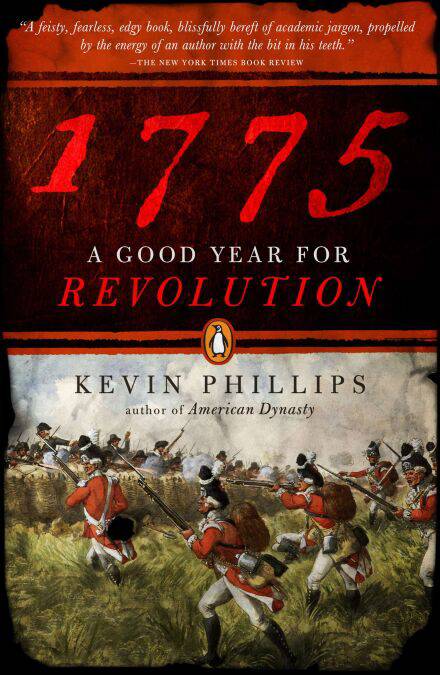
The contrarian historian and analyst upends the conventional reading of the American Revolution
In 1775, iconoclastic historian and bestselling author Kevin Phillips punctures the myth that 1776 was the watershed year of the American Revolution. He suggests that the great events and confrontations of 1775—Congress’s belligerent economic ultimatums to Britain, New England’s rage militaire, the exodus of British troops and expulsion of royal governors up and down the seaboard, and the new provincial congresses and hundreds of local committees that quickly reconstituted local authority in Patriot hands—achieved a sweeping Patriot control of territory and local government that Britain was never able to overcome. These each added to the Revolution’s essential momentum so when the British finally attacked in great strength the following year, they could not regain the control they had lost in 1775.
Analyzing the political climate, economic structures, and military preparations, as well as the roles of ethnicity, religion, and class, Phillips tackles the eighteenth century with the same skill and insights he has shown in analyzing contemporary politics and economics. The result is a dramatic narrative brimming with original insights. 1775 revolutionizes our understanding of America’s origins.
In 1775, iconoclastic historian and bestselling author Kevin Phillips punctures the myth that 1776 was the watershed year of the American Revolution. He suggests that the great events and confrontations of 1775—Congress’s belligerent economic ultimatums to Britain, New England’s rage militaire, the exodus of British troops and expulsion of royal governors up and down the seaboard, and the new provincial congresses and hundreds of local committees that quickly reconstituted local authority in Patriot hands—achieved a sweeping Patriot control of territory and local government that Britain was never able to overcome. These each added to the Revolution’s essential momentum so when the British finally attacked in great strength the following year, they could not regain the control they had lost in 1775.
Analyzing the political climate, economic structures, and military preparations, as well as the roles of ethnicity, religion, and class, Phillips tackles the eighteenth century with the same skill and insights he has shown in analyzing contemporary politics and economics. The result is a dramatic narrative brimming with original insights. 1775 revolutionizes our understanding of America’s origins.
Specificaties
Betrokkenen
- Auteur(s):
- Uitgeverij:
Inhoud
- Aantal bladzijden:
- 672
- Taal:
- Engels
Eigenschappen
- Productcode (EAN):
- 9781101601082
- Verschijningsdatum:
- 26/11/2012
- Uitvoering:
- E-book
- Beveiligd met:
- Adobe DRM
- Formaat:
- ePub


Alleen bij Standaard Boekhandel
+ 11 punten op je klantenkaart van Standaard Boekhandel
Cadeau

AANGERADEN


Beoordelingen
We publiceren alleen reviews die voldoen aan de voorwaarden voor reviews. Bekijk onze voorwaarden voor reviews.