


- Afhalen na 1 uur in een winkel met voorraad
- Gratis thuislevering in België vanaf € 30
- Ruim aanbod met 7 miljoen producten
- Afhalen na 1 uur in een winkel met voorraad
- Gratis thuislevering in België vanaf € 30
- Ruim aanbod met 7 miljoen producten





Omschrijving
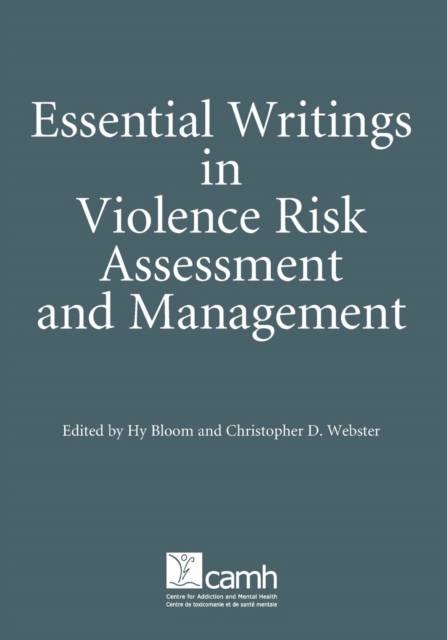
With Essential Writings in Violence Risk Assessment and Management, mental health and legal practitioners have quick access to the most important peer-reviewed writings in the field. The 31 journal articles and book chapters in this collection provide a complete foundational curriculum on the subject. Topics include: - the historical shift from "dangerousness" to violence risk assessment - the emergence of actuarial violence prediction - clinical prediction and assessment - the actuarial versus clinical controversy - decision making - treatments, security and program planning. Covering a field that crosses civil, forensic and correctional boundaries, this book is a valuable resource for clinicians, lawyers, judges, law enforcement officials, health and correctional administrators, journalists and anyone working in the forensic system. It is also of interest to anyone intrigued by how the forensic system assesses and manages people deemed to be violent, and how decision makers manage the often precarious balance between protecting the public and according the accused the greatest degree of freedom possible. The book's six main sections are preceded by introductions, written by the editors, that succinctly encapsulate the main arguments discussed by its contributors. Taken together, these introductions provide a concise summary of a complex topic.
Specificaties
Betrokkenen
- Uitgeverij:
Inhoud
- Aantal bladzijden:
- 636
- Taal:
- Engels
Eigenschappen
- Productcode (EAN):
- 9780888685896
- Verschijningsdatum:
- 15/03/2007
- Uitvoering:
- Paperback
- Formaat:
- Trade paperback (VS)
- Afmetingen:
- 178 mm x 254 mm
- Gewicht:
- 1084 g

Alleen bij Standaard Boekhandel
+ 189 punten op je klantenkaart van Standaard Boekhandel
Cadeau

AANGERADEN


Beoordelingen
We publiceren alleen reviews die voldoen aan de voorwaarden voor reviews. Bekijk onze voorwaarden voor reviews.